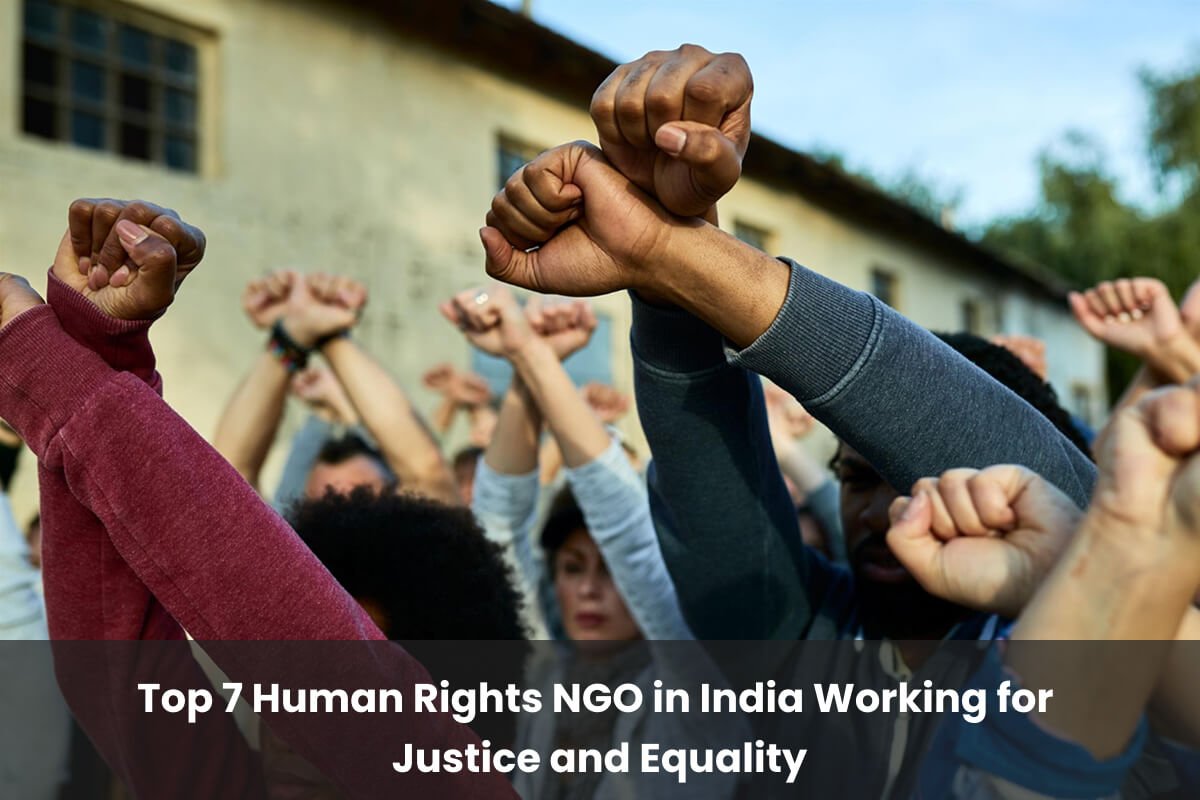
The just and democratic society is rooted in human rights. In case inequality is encouraged and there is celebration of diversity within the same society and country that is the case with India then the role of organizations that create this kind of scenario where protection of these rights are provided by them, as well as the serving of disadvantaged people within the same organization is much more important than before. Human rights non-governmental organizations are the unit that mobilizes against heterosexism and violence against women as they are a representative of the marginalized communities.
Such NGOs besides providing legal as well as social support also struggle to fight tooth and nail to create awareness, shatter systems of oppression and ensure that every individual alive has the facility to exercise his or her most basic rights. Their practice intercedes on the divide between law, society and the people who tend to be voiceless.
Before proceeding to discuss contemporary NGOs, which are deemed to be the most successful in this field, we need to first define the key role played by the large NGOs conducting their business in this sector.
The Role of Human Rights NGOs in India
NGOs that deal with human rights in India are a watchdog, guardian and chosen factors offering defence to individuals whose voices are frequently squashed. They become the filler where state machinery lacks, as they provide suckers to marginalized populations, including women, children, minorities, refugees, and marginalized groups the fact that they need to get justice and be shielded.
Such entities offer legal assistance, report the infringements and create awareness on social evils. They even work with international organizations, state agencies and local grass movements to press toward some level of system-wide changes to enhance democratic principles.
More pertinently, human rights NGOs also empower the communities through education on their rights and where to demand accountability. They are working to deal with any short-term crises as well as create a long-term resistance to inequality, discrimination, and misuse of power.
Top 7 Human Rights NGOs in India
Across the country, several NGOs are at the forefront of human rights advocacy. Each one works in unique ways — some provide direct legal assistance, others focus on policy reforms, and many empower marginalized groups through education and awareness. Together, they form a strong network committed to justice and equality.
Let’s take a closer look at seven of the leading human rights NGOs making a significant impact in India.
1. Human Rights Law Network (HRLN)
Headquarters/Location: New Delhi, India
Year Established: 1989
Primary Focus Areas: Legal aid, public interest litigation, advocacy for marginalized communities
Human Rights Law Network (HRLN) is a collaboration or network of socially-conscious lawyers and social activists dedicated to ensuring the realisation of fundamental rights of the excluded. It provides free legal service and participates in advocacy in order to change the system in the areas of women rights, labor rights, environmental justice and health.
Key Achievements & Programs:
HRLN has led thesuccessful litigation of landmark PILs that have defined human rights jurisprudence in India. It works across reproductive rights, child rights, disability rights, and the defence of stigmatized groups. The group also organizes training programs to lawtors and activists in order to boost the human rights movement.
Contact & Website Link:
Website – https://www.hrln.org
Contact – hrln@hrln.org
2. People’s Union for Civil Liberties (PUCL)
Headquarters/Location: New Delhi, India
Year Established: 1976
Primary Focus Areas: Civil liberties, democratic rights, freedom of speech, protection against state abuse
One of the oldest and distinguished human rights organizations of India include People Union of Civil Liberties (PUCL). Formed during the Emergency to defend the civil liberties it has been fighting tirelessly to champion democratic rights in the country.
Key Achievements & Programs:
PUCL has been vocal in criticizing illegal arrests, fatal police custody, censorship and exercise of authority. It issues reports of human rights violations, advocates human rights building, and assists with legalite in instances in which the activities of the state interfere with the rights of the citizens. The body has also been critical in enhancing freedom of speech and preserving the rights of the marginalized groups.
Contact & Website Link:
Website – http://www.pucl.org
Contact – puclnat@gmail.com
3. Commonwealth Human Rights Initiative (CHRI)
Headquarters/Location: New Delhi, India
Year Established: 1987
Primary Focus Areas: Access to justice, prison reforms, right to information, police accountability
The Commonwealth Human Rights Initiative (CHRI), a London based independent non-governmental organisation works to establish and promote human rights and access to justice in Commonwealth nations and particularly in India. It is interested in the characteristics of transparency, accountability, and fairness of the governmental regimes.
Key Achievements & Programs:
CHRI has done significant work of researching the state of prison conditions, police reforms and the right to information which have frequently been informing government policy. It has educate policing authorities on human sensitive behaviors, and help with campaigns that focus on enhancing accountability and transparency in law enforcing. The advocacy has been instrumental in the expansion of access to justice to marginalized communities by CHRI.
Contact & Website Link:
Website – https://www.humanrightsinitiative.org
Contact – info@humanrightsinitiative.org
4. Amnesty International India
Headquarters/Location: Bengaluru, Karnataka (operations currently limited due to restrictions)
Year Established: 1966 (India chapter)
Primary Focus Areas: Human rights advocacy, freedom of expression, ending discrimination, protecting vulnerable communities
Amnesty International India is the branch of the international organisation Amnesty that is known throughout the world as an able advocate of human rights. It has campaigned in India on gender-based violence, freedom of speech, the rights of marginalized communities, and corporate accountability.
Key Achievements & Programs:
In the recent years Amnesty international India despite its operation difficulties has brought out pivotal reports regarding human rights violation, carried out large campaigns across India against discrimination and has motivated young people to give voice to inquity. It has helped in bringing the world to the door-step of local human rights issues and it remains a beacon of world solidarity.
Contact & Website Link:
Website – https://www.amnesty.org/en/location/asia-and-the-pacific/south-asia/india/
Contact – info@amnesty.org
5. Human Rights Defenders Alert (HRDA) – India
Headquarters/Location: Madurai, Tamil Nadu
Year Established: 2009
Primary Focus Areas: Protection of human rights defenders, advocacy, monitoring human rights violations
Human Rights Defenders Alert (HRDA) is a national network whose activities are devoted to the protection of activists, journalists, and lawyers being at risk because they have risen against injustice. It serves as a quick-response organ to help people and organisations that protect human rights.
Key Achievements & Programs:
HRDA has been fighting in situations of harassment towards and violent arrests and attacks on activists in different cases. To prevent accountability and check abuse of human rights, it works with the national and international organizations. HRDA empowers human rights activists across India by offering legal assistance, emergency assistance and advocacy.
Contact & Website Link:
Website – https://hrdaindia.org
Contact – hrda.india@gmail.com
6. Oxfam India
Headquarters/Location: New Delhi, India
Year Established: 1951 (as part of Oxfam International; Oxfam India registered in 2008)
Primary Focus Areas: Reducing inequality, economic and social justice, disaster relief, women’s rights
Oxfam India is an affiliate of the international confederation of Oxfam, and this organisation intensively works on human rights with the view of decreasing inequality and empowering the marginalised populations. It integrates advocacy and grassroots programs to confront systems that indicate poverty and injustice.
Key Achievements & Programs:
Oxfam India has also conducted effective campaigns against gender-based violence, castism, and economic opportunity. It offers humanitarian aid in the case of natural disasters and crises, guarantees food security, medical care, and occupation of the most vulnerable citizens. Through its policy advocacy, it has impacted discussions on equity in taxation, the rights of the workers and inclusive development.
Contact & Website Link:
Website – https://www.oxfamindia.org
Contact – advocacy@oxfamindia.org
7. Association for Protection of Civil Rights (APCR)
Headquarters/Location: New Delhi, India
Year Established: 2006
Primary Focus Areas: Legal aid, human rights education, advocacy against discrimination and injustice
Association for Protection of Civil Rights (APCR) is a human rights NGO that delivers both legal support and advocacy to marginalized and vulnerable groups in India. It is interested in protecting civil liberties, achieving justice and accountability to human rights violations.
Key Achievements & Programs:
APCR has delivered free legal services to thousands of people being incarcerated erroneously, subjected to violence in their communities, and discrimination. It holds training sessions on human rights with young people and communities to spread knowledge on their rights. The group further conducts legal research and advocacy as a means of changing policies in a way that empowers civil liberties.
Contact & Website Link:
Website – https://www.apcrindia.org
Contact – contact@apcrindia.org
Related Blog: Top 10 NGOs for Disabled Persons in India Making a Difference
Challenges Faced by Human Rights NGOs
Although the human rights NGOs in India are instrumental in ensuring justice and equality, it is not an easy path. These organizations can, among many others, be resisted on many fronts e.g. scarce resources, systematic obstacles.
Some of the main challenges they have to cope with are as follow:
- Restrictions on foreign financing, lack of funds/money/financial resources, lack of donations or reduced grants or terms and conditions on receiving grants by many NGOs.
- Government restrictions – Government regulations such as strict laws and bureaucracy may keep the NGOs at bay not to conduct any advocacy or international working.
- Threats and Intimidation-Activists and human privileges investors are frequently harassed or falsely incriminated or even physically abused because they raise sensitive subjects.
- Public suspicion- There are times when the misleading of information or the perception of NGOs may weaken the support of the society.
- Legal barricade- Long court cases and justice delays in courts create a barrier to seeking prompt justice in cases of victims.
- Operation problems – There can be a shortage of manpower, infrastructure and technical resources leading to ineffective outreach and effectiveness.
FAQs About Human Rights NGO in India
These are a few questions that one may frequently have about the functioning of human rights NGOs in India.
Q1. How do human rights NGOs work in India?
Efforts in India Indian allows Human rights NGOs to assist victims through legal aid, conduct research and raise awareness of the extent of the violation. They also speak out to change policy, record and investigate real-life abuse as well as enable governments and communities to hold leaders to account.
Q2. Can students join human rights NGOs as interns?
Indeed, internship and volunteer opportunities are provided by human rights NGOs to students. This gives them a chance to have hands on experience in their research, legal documentation, advocacy campaigns and grassroots works.
Q3. What impact have human rights NGOs made in India so far?
These kinds of NGOs have been important in making a difference in landmark law suits, prison reform, assistance in the marginalized communities and enlightenment on issues such as gender equality and freedom of expression. Their struggle has impacted the whole nation on the laws, policies and the perception.
Q4. What issues do human rights NGOs in India address?
They cover a diverse agenda of women rights, minority rights, labour rights, freedom of speech, death in police custody, caste discrimination and protection of vulnerable members of society i.e. refugees and children.
Q5. How are human rights NGOs funded in India?
The source of funding is in the form of personal donations, foreign grants, memberships as well as that of philanthropic institutions. Nevertheless, a lot of NGOs are confronted by obstacles as a result of the prohibition on foreign financing and the small amount of contributions at the domestic level.
Conclusion
Human rights NGOs in India are in the centre stage of struggle against injustice, equality and dignity. They offer legal assistance to the disadvantaged, give a voice to the voiceless and they put high power bodies in check. Despite resource, legal and intimidation problems, their judgement to uphold basic freedoms is irrepressible.
It is these organizations that have helped India to make gains towards consolidating the democratic values in the country and protecting the vulnerable communities. Their contributions cause one to remember that human rights are not gifts, but natural belonging of every person and protecting them is a responsibility of a global community. We can come one step closer to equality and justice being an ordinary part of a society, rather than a mere ideal, which is achievable by supporting such NGOs.
Partner with Social For Action and Make a Real Difference Today!
At Social For Action (SFA), we are of the belief that empowerment of Changemakers who have a voice against justice is important. Use our platform to meet with reputable human rights NGOs and be able to support their efforts and help make India a better place.
No matter which of these ways you decide to take, volunteering, donating, or raising awareness, you can make the battle against inequality and injustice even stronger. Collectively, we must observe, honor and respect human dignity making sure that no voice is heard.





Post a Comment