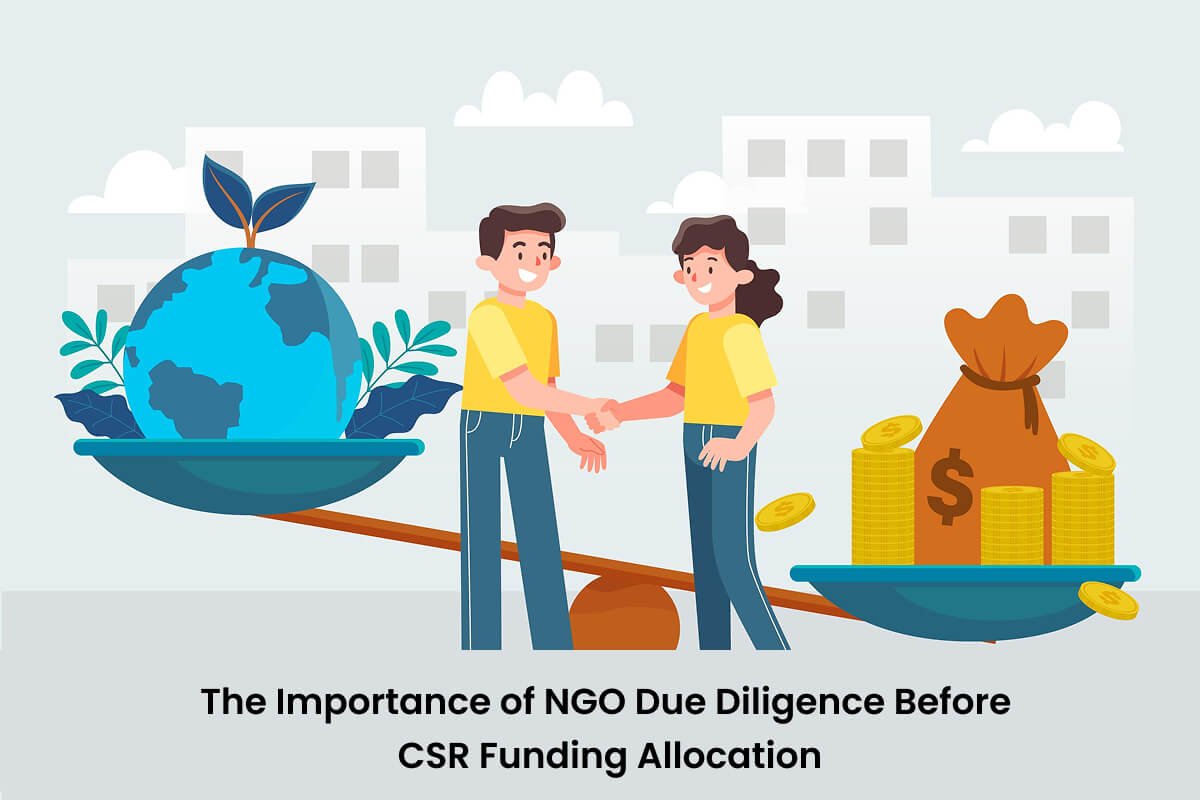
What Is NGO Due Diligence?
NGOs play a detracting function in implementing friendly impact drives, especially in the CSR environment. However, before aid with some arranging, it is essential to judge allure credibility, agreement, and functional purity. This is where due alertness enhances a key step in the accountable process.
NGO due vigour is the systematic process of evaluating and proving the legitimacy, believeableness, and competence of a non-governmental institution before charming in partnerships or capital. It includes inspecting legal registrations, government construction, financial records, past project conduct, and agreement with supervisory necessities.
The verification process usually contains checking enrolment certificates (in the way that trust, humankind, or Section 8 company rank), approving tax exemptions, reviewing audited fiscal declarations, and assessing board appendage trainings. Additionally, organizations grant permission conduct location visits, evaluate impact reports, and confirm either the NGO heeds to statutory standards and righteous practices. This comprehensive judgment helps guarantee that the NGO is both constitutionally obedient and operationally capable of transferring engaged outcomes.
Why Due Diligence Matters in CSR Funding
CSR actions include not just generosity but also meaningful economic investments. To guarantee these budget are used efficiently and responsibly, arranging must carefully experienced their exercise partners.
Due intensity is important in CSR funding cause it guarantees responsibility, transparency, and adjustment accompanying intended friendly goals. Without proper judgment, guests risk partnering accompanying arrangements that may lack the competency, government, or purity required to kill projects efficiently.
By conducting all-encompassing due earnestness, companies can ratify that budget are utilized for honest purposes, underrate risks of fraud or transgression, and guarantee agreement with supervisory foundations. It also helps in selecting NGOs accompanying justified track records, with growing the likelihood of determinable and tenable impact. Ultimately, due diligence safeguards two together the association’s reputation and the profit of allure CSR actions.
Risks of Inadequate NGO Verification
Partnering with NGOs without proper evaluation can expose organizations to multiple operational, financial, and reputational challenges. Skipping or rushing the verification process often leads to unforeseen risks that can undermine the effectiveness of CSR initiatives.
Failing to conduct thorough NGO due diligence can result in several critical issues, including:
- Misuse of funds: Without proper checks, funds may be diverted, misallocated, or used for purposes other than intended social impact.
- Compliance issues: NGOs that are not fully compliant with legal and regulatory requirements can create legal liabilities for the funding organization.
- Project delays: Lack of operational capacity or poor management can lead to missed timelines and incomplete project delivery.
- Lack of transparency: Inadequate reporting systems may make it difficult to track fund utilization and measure impact effectively.
- Reputational risk: Associating with unreliable or unethical NGOs can damage a company’s public image and stakeholder trust.
- Ineffective impact delivery: Poorly vetted NGOs may fail to achieve desired outcomes, resulting in wasted resources and limited social benefit.
Key Parameters for NGO Assessment
Choosing the right NGO partner requires a structured evaluation across multiple dimensions. By focusing on key assessment parameters, organizations can ensure that their CSR initiatives are implemented effectively, transparently, and in alignment with intended goals.
Financial Transparency
Financial transparency is a critical indicator of an NGO’s credibility and accountability. It involves reviewing audited financial statements, income and expenditure reports, and fund utilization records to ensure that resources are being managed responsibly. Clear documentation helps funders understand how donations are allocated and whether administrative costs are reasonable.
In addition, consistent financial disclosures and openness to sharing records reflect the organization’s integrity. NGOs that maintain well-documented financial systems are more likely to inspire trust and demonstrate their commitment to ethical practices.
Legal & Compliance Checks
Legal and compliance verification ensures that the NGO operates within the framework of applicable laws and regulations. This includes validating registration status, tax exemptions, and adherence to statutory requirements such as filings and certifications.
Regular compliance not only reduces legal risks but also signals that the organization follows proper governance standards. NGOs with strong compliance records are better positioned to form long-term, risk-free partnerships with corporate entities.
Project Execution Capability
An NGO’s ability to execute projects effectively is central to achieving meaningful impact. This involves evaluating past projects, implementation strategies, team expertise, and on-ground presence. Organizations with a proven track record are more likely to deliver projects on time and within scope.
Assessing execution capability also includes understanding the NGO’s operational processes, partnerships, and scalability. A capable NGO can adapt to challenges and ensure that project objectives are met efficiently.
Monitoring & Reporting Practices
Robust monitoring and reporting systems are essential for tracking progress and measuring impact. NGOs should have structured mechanisms to collect data, evaluate outcomes, and provide regular updates to stakeholders.
Transparent and timely reporting enables companies to assess whether their CSR investments are generating the desired results. It also ensures accountability and facilitates continuous improvement in project implementation.
Role of Digital CSR Platforms
As CSR initiatives scale and involve multiple stakeholders, managing NGO partnerships manually can become complex and time-consuming. This is where digital solutions are increasingly playing a transformative role in simplifying and strengthening the due diligence process.
Digital CSR platforms streamline the process of identifying, evaluating, and onboarding NGO partners by leveraging technology-driven tools. These platforms centralize critical information such as legal documents, financial records, project histories, and compliance data, making it easier for organizations to access and review relevant details in one place.
Automated verification is a key advantage of such platforms. Through integrated systems and standardized checks, they can quickly validate registration details, compliance status, and financial disclosures. Some platforms also use data analytics to flag inconsistencies or risks, enabling faster and more accurate decision-making. This reduces manual effort, minimizes human error, and ensures a more reliable and scalable due diligence process.
Benefits of Proper Due Diligence
Conducting thorough due diligence is not just a compliance requirement—it is a strategic approach to maximizing the effectiveness of CSR investments. When done correctly, it creates a strong foundation for impactful and sustainable partnerships.
Effective NGO due diligence offers several advantages, including:
- Improved fund utilization: Ensures that financial resources are directed toward genuine needs and used efficiently.
- Reduced risk: Minimizes exposure to fraud, legal complications, and operational inefficiencies.
- Better impact tracking: Enables clear measurement of outcomes through reliable data and reporting systems.
- Increased stakeholder trust: Builds confidence among investors, employees, and the public through transparent and responsible practices.
- Stronger partnerships: Helps identify credible NGOs, leading to more effective and long-term collaborations.
FAQs About NGO Due Diligence
As organizations increasingly collaborate with NGOs for CSR initiatives, several common questions arise around the due diligence process. Addressing these FAQs helps clarify its importance and practical implementation.
Q1. What is NGO due diligence?
NGO due diligence is the process of evaluating an organization’s legal status, financial health, governance, and operational capability before entering into a partnership or providing funding. It ensures the NGO is credible, compliant, and capable of delivering impact.
Q2. Why is due diligence important in CSR funding?
Due diligence is essential in CSR funding to ensure accountability and proper utilization of resources. It helps organizations avoid risks, comply with regulations, and partner with NGOs that can effectively achieve desired social outcomes.
Q3. What are the risks of inadequate NGO verification?
Inadequate verification can lead to misuse of funds, legal and compliance issues, project delays, lack of transparency, and reputational damage. It may also result in poor impact delivery and inefficient use of CSR budgets.
Q4. How can companies assess NGO credibility?
Companies can assess NGO credibility by reviewing legal registrations, audited financial statements, past project performance, governance structures, and compliance records. Conducting site visits and evaluating monitoring and reporting systems also helps in making informed decisions.
Q5. Can digital platforms support due diligence?
Yes, digital CSR platforms can significantly support due diligence by automating verification processes, centralizing data, and providing real-time insights. They make it easier to assess NGO credibility, reduce manual effort, and improve the accuracy and efficiency of evaluations.
Key Takeaways
To make CSR initiatives truly impactful and risk-free, organizations must adopt a structured and proactive approach to NGO evaluation. Proper due diligence not only safeguards investments but also strengthens the overall effectiveness of social programs.
A well-executed NGO due diligence process lays the foundation for successful and sustainable CSR partnerships:
- Verification ensures transparency: Thorough checks help confirm the NGO’s credibility and ethical practices.
- Reduces compliance risks: Proper validation minimizes legal and regulatory challenges.
- Improves CSR outcomes: Partnering with capable NGOs leads to measurable and meaningful social impact.
Ensure Effective CSR Partnerships with SocialForAction
Leverage digital platforms like SocialForAction to streamline NGO due diligence and ensure compliant, impact-driven partnerships.Visit https://www.socialforaction.com/ to explore how you can enhance transparency, reduce risks, and maximize your CSR impact.





Post a Comment