Community involvement has become an essential part of modern society. Whether people do their neighborhoods, support NGOs, or help all the whole dangers, contributing to public good has enhanced two together a responsibility and a private choice. Yet many folk still use the terms social work and suggesting interchangeably—when really, they are not the same.
Both include meal others, bestowing period, and donating to meaningful causes. However, the purpose, form, and ambitions behind them vary considerably. Understanding these distinctnesses not only helps individuals improve selections but more allows institutions to equal volunteers accompanying the right space.
This item breaks down two ideas together in detail, climaxes their dissimilarities, and supports clarity on whether that individual can be right for you.
What Is Community Service?
Community service refers to participating in activities that benefit the local community, society, or specific groups in need. These activities are often organized by educational institutions, government programs, NGOs, or neighborhood groups to address social issues.
Community service may be required in certain situations—such as academic programs, corporate CSR initiatives, or even court-mandated service for rehabilitation or corrective purposes. However, it can also be done voluntarily by individuals who want to contribute to a cause.
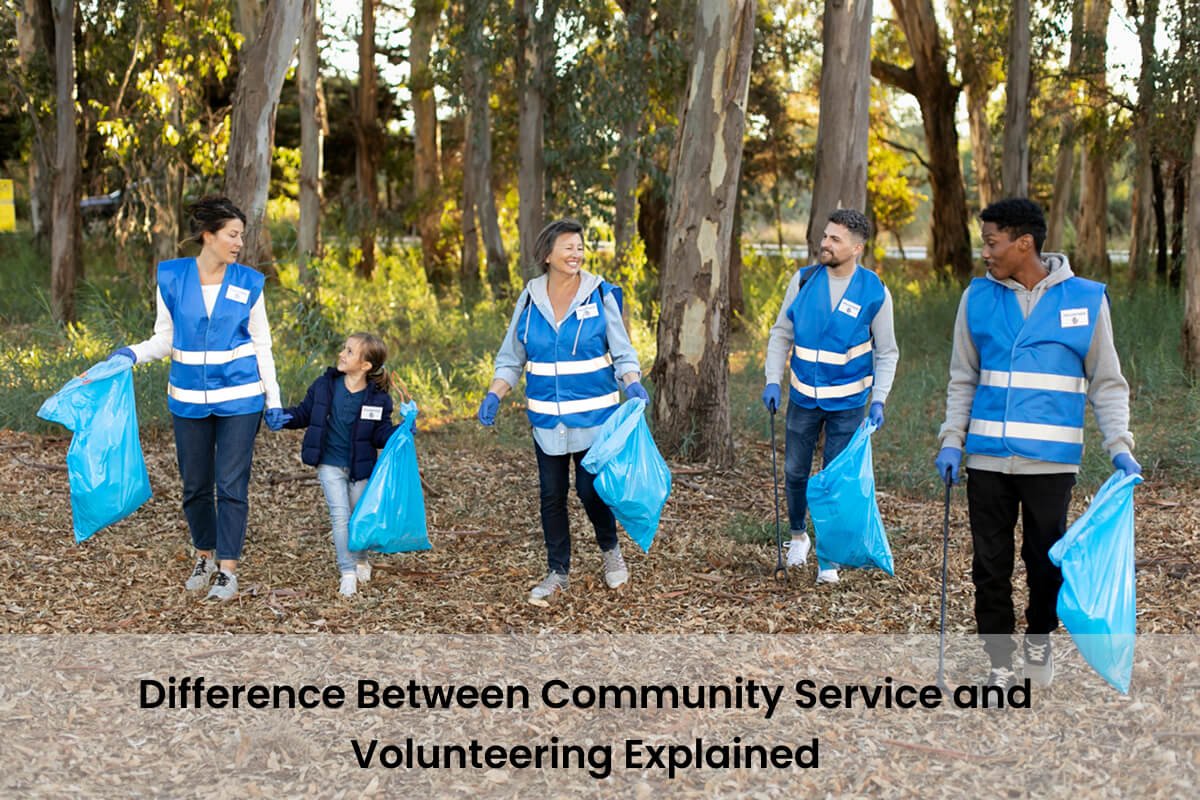
Typical examples include participating in cleanliness drives, supporting fundraising events, helping old-age homes, assisting disaster relief efforts, or tutoring underprivileged students. Community service emphasizes collective responsibility and improving the community’s well-being through structured action.
Ultimately, community service plays a vital role in social development, creating safer neighborhoods, stronger support systems, and more inclusive communities.
Related Blog: What Is Community Service? Meaning, Purpose & Real-Life Examples
What Is Volunteering?
Volunteering is the act of offering time, skills, or resources willingly and without any obligation. Unlike community service, it is entirely optional and done out of personal motivation, passion, or compassion.
People volunteer for countless reasons—wanting to contribute to society, gain experience, develop skills, or be part of a meaningful initiative. Volunteering is flexible and can involve anything from mentoring and animal care to environmental protection, event support, or online assistance.
Volunteers choose when, how long, and in what capacity they want to serve. Because it is self-directed, volunteering often feels more fulfilling, personal, and passion-driven. Many NGOs and non-profits rely heavily on volunteers to manage programs, conduct outreach, and impact communities effectively.
Volunteering empowers individuals to take control of their contributions and shape their social impact based on their interests and abilities.
Related BLog: Understanding Volunteer Work: What It Is and Why It Matters
Key Differences Between Community Service and Volunteering
Although both contribute positively to society, the fundamental differences lie in motivation, requirement, flexibility, structure, and purpose. Before listing the differences, it’s important to understand that neither is superior. Both forms of service help create meaningful change.
Community service often stems from a requirement or structured initiative. Schools, universities, organizations, and courts may mandate participation for personal development, social responsibility, or rehabilitation. This gives community service a formal, goal-oriented structure focusing on measurable outcomes for society.
Volunteering, however, is self-driven. Volunteers choose their cause, duration, and level of involvement. This flexibility makes volunteering deeply personal and often more fulfilling. It offers opportunities for emotional growth, skill building, and long-term engagement with causes one cares about.
To understand their distinctions clearly, refer to the following table:
Comparison Table: Community Service vs Volunteering
| Factor | Community Service | Volunteering |
|---|---|---|
| Nature | Often structured and organized | Flexible and self-initiated |
| Requirement | May be mandatory (school, court, corporate CSR) | Completely optional |
| Motivation | Obligation, social duty, requirements | Passion, interest, compassion |
| Duration | Fixed hours as required | Flexible based on volunteer |
| Scope of Activities | Community-focused tasks with defined goals | Wide range of causes and roles |
| Organizing Bodies | Schools, government programs, NGOs | NGOs, community groups, independent initiatives |
| Skill Application | Often general tasks | Can be skill-based or specialized |
| Outcome Focus | Community impact | Personal growth + social impact |
| Recognition | Certificates often provided | Certificates optional or not required |
| Participation Style | Usually part of a group initiative | Individual or group |
| Control Over Choice | Limited (assigned tasks) | High (choose role and schedule) |
| Emotional Connection | May vary depending on requirement | Usually strong due to personal choice |
Benefits of Community Service
Community service offers structured opportunities to help society. It strengthens social responsibility and creates visible, measurable improvements in communities.
Key Benefits
- Encourages civic responsibility and social awareness
- Helps develop teamwork and leadership skills
- Strengthens community bonds and local networks
- Creates safer and cleaner environments
- Helps individuals meet academic or professional requirements
- Provides meaningful, real-world learning experiences
- Enables youth to build character and empathy
- Supports vulnerable communities with essential services
Related Blog: Top Benefits of Community Service for Students & Adults
Benefits of Volunteering
Volunteering provides emotional, social, and professional benefits. Its flexible nature makes it appealing to people of all ages and backgrounds.
Key Benefits
- Allows individuals to choose causes they care about
- Builds personal satisfaction and emotional well-being
- Helps develop new skills and strengthen resumes
- Offers networking opportunities with like-minded people
- Enhances confidence and communication skills
- Provides real-world experience for students
- Supports NGOs with manpower and expertise
- Can lead to long-term commitments and leadership roles
Related Blog: Why Do You Want to Volunteer? Discovering Personal and Community Benefits
Which One Is Right for You?
Choosing between community service and volunteering depends on your goals, availability, and motivations. Community service is ideal if you prefer structure, want to work in organized programs, or need to fulfill a requirement. It offers guided experiences where roles are clearly defined, making it easier for beginners.
Volunteering is the right choice if you seek flexibility, personal fulfillment, or the freedom to support causes you are passionate about. It allows you to explore different roles, develop skills, and contribute at your own pace. Many people start with volunteering and later participate in community service projects for broader impact.
Ultimately, the choice depends on your personal interests, timeframe, and the type of impact you want to create. Both are meaningful, and you can even engage in both—structured community service as well as passion-driven volunteering.
FAQs About Community Service Vs Volunteering
Below are the most commonly asked questions to help you understand both concepts clearly.
Q1. Is volunteering more flexible than community service?
Yes. Volunteering is highly flexible because volunteers can choose when they want to participate, how often they want to contribute, and what tasks they prefer. Community service, on the other hand, often follows a fixed schedule or required number of hours, making it less flexible.
Q2. Does volunteering help with career growth?
Absolutely. Volunteering helps individuals build essential skills, gain practical experience, and strengthen their resumes. Many employers value volunteer experience because it shows initiative, compassion, responsibility, and teamwork. It can also help students explore career interests and build networks.
Q3. Why is volunteering considered optional?
Volunteering is optional because it is driven by personal choice rather than obligation. People volunteer when they genuinely want to contribute to a cause. Unlike community service, volunteering is rarely mandated by schools or institutions, making it a more self-directed activity.
Q4. Are NGOs involved in community service, volunteering, or both?
NGOs play a role in both. They organize structured community service programs for local development and also rely heavily on volunteers to run projects, conduct outreach, fundraise, and support operations. NGOs benefit from both mandatory service groups and passionate volunteers.
Q5. Is community service paid or unpaid?
Community service is generally unpaid. It is performed to support community needs, fulfill academic requirements, or participate in social responsibility initiatives. Because it is meant to benefit society, financial compensation is not involved.
Conclusion
Both community service and volunteering share the common goal of improving society, but they differ in purpose, motivation, and structure. While community service is often requirement-driven and organized, volunteering is flexible, passion-driven, and optional. Engaging in either can lead to personal growth, stronger communities, and long-lasting impact.
The important thing is to get involved—whether through structured programs or self-directed volunteering. Every effort, big or small, contributes to building a kinder and more supportive world.
Empower Communities with Your Support — Join Social For Action
If you’re inspired to make a difference, Social For Action (SFA) offers a trusted platform to connect you with impactful community projects and volunteering opportunities. Whether you want to support a cause financially, volunteer your time, or join a community initiative, SFA ensures your effort reaches those who need it most.
Take the first step today. Your contribution can empower individuals, strengthen communities, and create lasting change.






Post a Comment