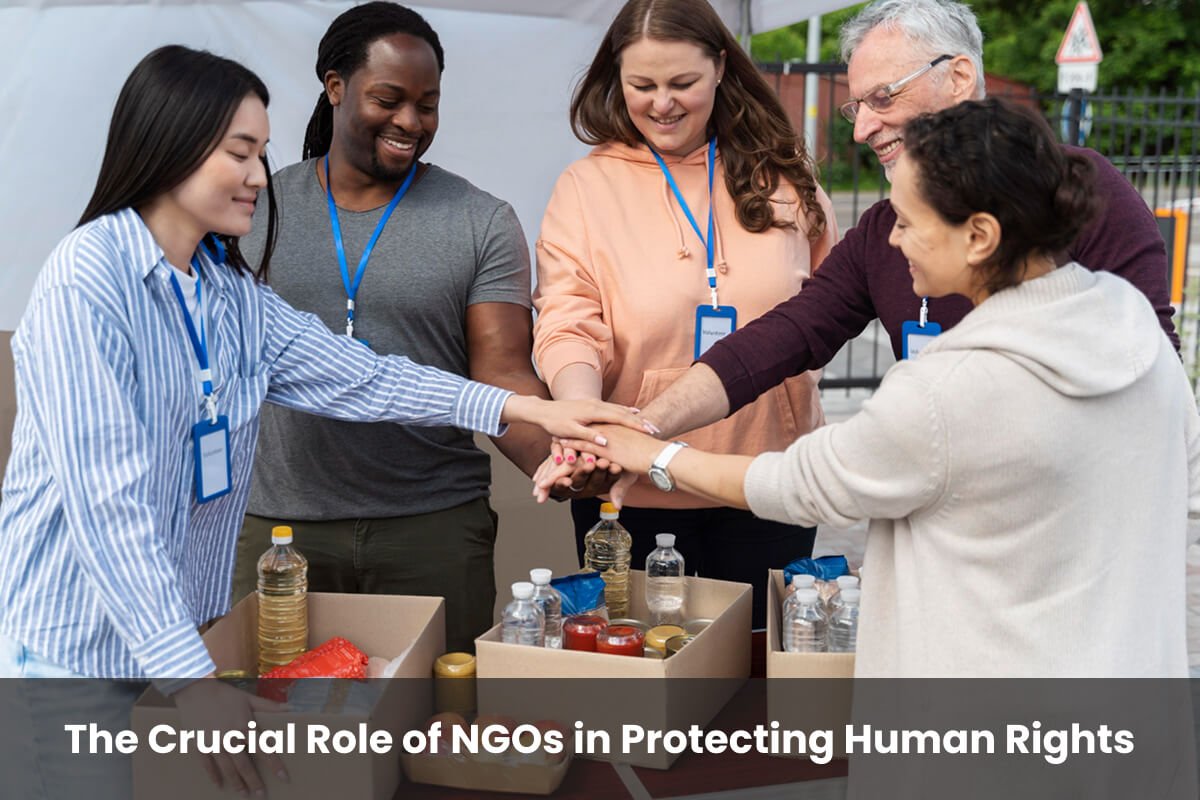
Each person, without exception, has the right to live a life in respect, whereby they are not subjected to fear, discrimination, or injustice. Still, millions of people, in various places of the world, continue to live under the threats of violence, inequality, and exploitation. At such times, the voices of the NGOs speak the language of the unheard, and thus they become the agents of justice that commonly lift up the voices of those who cannot be silenced and henceforth, creating the voice of justice that they bring forward.
Non-Governmental Organizations (NGOs) are the human rights watchdogs which actively and directly help to sustain, respect, and promote human rights. NGOs are those that provide the linkage between these two questions: Where government systems fail to reach; and What immediate help plus long-term advocacy is needed. The involvement of such entities not only through virtue of their real impact and involvement in the international law mechanisms open the doors to an interpersonal as well as a societal level of humanity in the future plan of global-community evolution besides, they support and spend money for victims, empower and mobilize community-building agencies, and more.
We could trace human rights NGOs’ intervention with the hurdles and also they shed light on the place that we may show our part in this movement for the justice of rights worldwide.
Understanding Human Rights
Human rights are the fundamental freedoms and protections which form the core of the heritage of every human being regardless of their race, sex, or religious beliefs, or nationality. These sorts of rights include the entitlement to food, living, education, healthcare, fair treatment by law, and the freedom of speech.
The Universal Declaration of Human Rights (UDHR), representing the very basis of the modern human rights law, was signed in 1948 by the United Nations. The document indicates that these are the rights of every human being, and hence, they are absolute, perpetual, and indivisible — they are not to be taken away from people, and neither can they be separated from each other.
Whilst governments are undoubtedly those who are mainly responsible for the protection of these rights, NGOs are the ones that do most of the ground work in keeping them accountable for their commitments. They achieve this goal through their exercises like doing the scrutiny of violations, raising public awareness, and leading the movement towards justice — thus, in essence, turning the moral worry into the actual world intervention.
The Key Roles of NGOs in Protecting Human Rights
Non-governmental organizations (NGOs) are essentially both the eyes on the street and the initiators of change. Their operation scale can be as small as a neighborhood and as broad as a planet. NGOs are the world’s primary agents of change via these methods:
1. Advocacy and Awareness
Arguably, the sound of the NGO’s voice is the most robust weapon they can use. They unveil all the human rights abuses and demand the changes that are needed. No matter what the matter was e.g. child labor, gender discrimination or supporting the freedom of speech, NGOs are the ones which ensure that these issues get acknowledged and listened to.
By holding workshops, rallies, and social networking campaigns NGOs educate the public about their rights and energize them to express their views. Such knowledge has the power to completely transform whole communities – turning people into individuals who recognize their own worth and demand justice.
2. Legal Assistance and Policy Reform
Some NGOs are devoted to the provision of legal assistance to the victims of human rights abuses. They support in filing complaints, giving legal representation to the most vulnerable, and making equal access to justice for the less fortunate.
Meanwhile, NGOs also make changes in policies. They convince governments to regulate or change laws that protect the vulnerable through research, documentation, and partnership. Most of their proposals become the foundation of national and international human rights policies.
3. Humanitarian Aid and Crisis Response
A majority of the time, due to the occurrences of wars, natural disasters, or revolts, NGOs are the ones who step up to help first. They give the affected people food, shelter, medical care, and sometimes even provide them with emotional support.
Human rights are not only the right to be free from abuse, but they also include the right to live in dignity. Those who are engaged in humanitarian work make sure that the displaced, refugees, and victims of disasters get humane treatment and are respected.
4. Monitoring and Reporting Violations
Credit for being watchdogs and hence closely watching and reporting human rights violations should go to NGOs. They gather information, prepare reports, and submit their discoveries to the appropriate national authorities or international organizations such as the United Nations Human Rights Council.
This sort of exposure is very important because it holds those in power accountable for what they do. NGO’s work is the thing that separates the large number of cases of injustice going unnoticed from them coming out into the open.
5. Empowering Communities
The fact is that the real revolution is the one when people gain the power to stand up for themselves. NGOs operate among the less privileged, imparting them with the knowledge of their rights and giving them the courage to demand them.
They give women, minorities, and marginalized groups access to education, vocational training, and the promotion of self-help. Empowerment is the road that leads to liberty, and liberty leads to a change that lasts forever.
Challenges Faced by NGOs in Human Rights Work
Human-rights NGOs, which, in a way, represent the frontline troops in this fight for human rights, except that they are zealously dedicated to the cause, face a myriad of obstacles that limit their activities. Let’s take a look at some of their examples:
- Politically, governments do not only exert control over such NGOs but also limit their freedom of action.
- Long-term projects, in particular, are most hard hit by the lack of funding.
- Some people may find it hard to believe but the truth is that harassment against human rights activists and staff is on the rise.
- When an institution undergoes a bureaucratic registration process or obtains foreign funding, it is often considered as being under scrutiny.
- Distrust of the people and misunderstanding of the objectives of the institution are other problems that NGOs have to deal with.
- On top of that, they happen to be the victims of assaults in war and high-tension areas.
The fact that NGOs withstand all these challenges and keep on doing what they are supposed to do is commendable.
Top Human Rights NGO in India
There exist a great number of good NGOs in India. They do an excellent job in protecting human rights in different areas. Here is a list of the most important ones:
- Amnesty International India – The main goal of a.m.i is to create and maintain conditions where freedom of speech, equality, and justice can be realized.
- Human Rights Law Network (HRLN) – Human rights abuses call for immediate and local rescue. On hearing of such incidents, HRLN is there at the spot within minutes to provide help and support.
- CRY (Child Rights and You) – The organization, by constructing the foremost rights to children, thereby ensures that kids will be supplied with education, health, and security.
- Oxfam India – Doing this first step is Oxfam’s India objective to completely eradicate the issue of inequality and to promote women’s empowerment.
- People’s Union for Civil Liberties (PUCL) – The organization through its different activities is actively opposing the suppression of civil liberties and democratic rights.
- Majlis Legal Centre – Dedicated to providing the utmost care, the centre offers instrumental assistance to women suffering from domestic abuse and sexual harassment.
- National Human Rights Commission (NHRC) – The neutral authority, which investigates the cases and ensures that the lawbreakers are held accountable besides making the facts known to the public.
They, in fact, form the base and the features which have powered the winning human rights struggle that India has successfully conducted.
Related Blog: Top 7 Human Rights NGO in India Working for Justice and Equality
How You Can Support Human Rights NGOs?
You don’t have to be a lawyer or an activist to initiate changes — all the small steps matter. Here are some ways to support human rights NGOs:
- Donate regularly to reliable NGOs that reflect your values.
- Offer volunteer services or your skills. It can be anything from writing, social media to fieldwork.
- Share only the information that you have confirmed and that others can then find online.
- Participate in campaigns and petitions that call for justice and equal rights.
- Besides that, you can study topics related to human rights and then instruct others.
- Moreover, you can help labor and human rights by being a faithful customer of socially responsible businesses.
Change through collective action is huge — this is the point where people and NGOs team up to bring about a radical societal change.
FAQs About Role of NGOs in Protecting Human Rights
Q1. Do NGOs work with the UN on human rights issues?
Yes, many NGOs cooperate with the U.N. and its different departments by being there at international conferences, delivering their documents, and also by taking part in the global human rights programs.
Q2. What are the main sources of funding for human rights NGOs?
Human rights organizations get most of the money through donations from individuals and some from Corporates and International agencies. Additionally, they also have funds from online sources such as Crowdfunding. Therefore they must maintain mutual transparency and good governance.
Q3. What are some well-known human rights NGOs in India?
Some of the most prominent, and long-standing, human rights organizations in India are Amnesty International India, HRLN, CRY, and Oxfam India.
Q4. How can individuals contribute to human rights NGOs?
An individual can be instrumental through contributions, voluntary service, positive advocacy, or digital campaigning. The smallest tasks such as signing up for the petitions and spreading trustworthy news also play an important role as they allow messages to be disseminated to a wider audience.
Q5. Why do some NGOs face challenges from governments?
On a few occasions, NGOs have been critical of government policies or have even revealed abuses in the name of human rights that are perpetrated by governments and therefore they may get an antagonistic response. However, a democratic society with a free and independent civil sector is the foundation of democracy and accountability.
Conclusion
Non-government organizations are a human rights movement’s core. They are the ones who give a voice to those who have none, protect those who are weak and remind the universe that justice is not to be taken off the list of options.
Their functioning is quite difficult – but it is absolutely necessary. In every investigation, every report, and every life saved, we move one step closer to a world that is more just and kinder.
If we help NGOs, it means that we help the idea that every human being is entitled to dignity and equal rights irrespective of his/her identity or origin.
Unite for a Better Future — Join the Movement with Social For Action
At Social For Action (SFA), we are convinced that the defense of human rights is the result of collective action. We bring together enthusiastic individuals, NGOs that are dedicated, and causes that have an impact to effect the change that is real.
In any case, through donations, volunteering, or awareness-raising, your contribution is the one that can be the most helpful in the rights of those who are in great need. Let us, as a team, establish a world where love, equality, and justice are not just some lofty ideals, but the reality that we all share.





Post a Comment