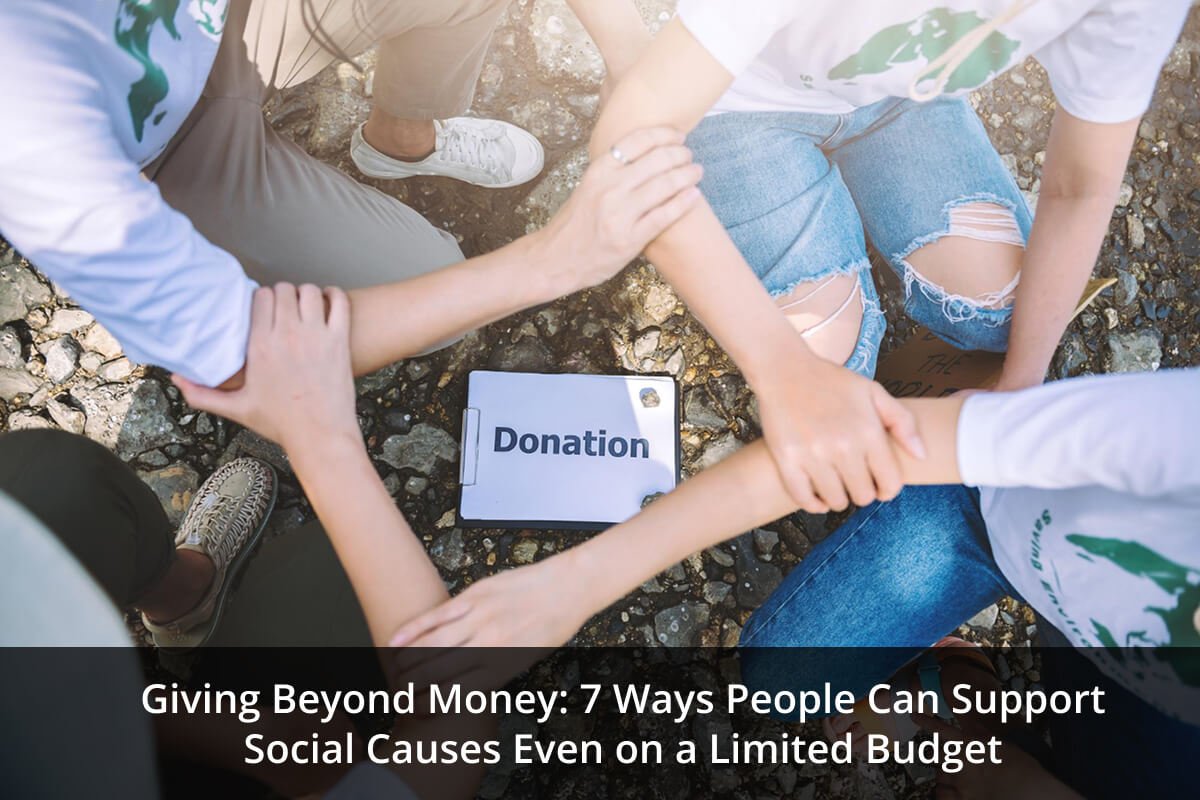
Why Social Impact Is About More Than Donations
Why Social Impact Is About More Than Donations
When nation consider supporting a friendly cause, the before anything else that often meets expectations mind is making a commercial donation. While finances gifts are essential for funding programs, buying possessions, and experiencing nonprofit movements, they show only one facet of establishing meaningful friendly change.
Communities blossom when things contribute in different habits. Time, professional expertise, state of being an informal teacher, assistance, creativity, and society partnership all play vital acts in plateful not commercially motivated organizations attain their responsibilities. In many cases, these non-financial offerings maybe just as valuable as gifts cause they restore organizational ability, extend outreach, and build enduring connections within societies.
Every person has singular skills, knowledge, and possessions that can form a positive distinctness. Whether dignitary volunteers at a local society occurrence, mentors a undergraduate, shares an knowledge campaign on friendly media, or offers professional knowledge to a not commercially motivated, they are contributing to a best activity of social change.
Recognizing that bestowing offers beyond funding for a project constructs a more all-embracing culture of philanthropy—one place all can participate, although their gains or financial assets.
Understanding the Different Forms of Giving
Giving is often associated with charitable donations, but meaningful contributions come in many forms. Every individual has something valuable to offer, and nonprofits rely on a combination of financial, human, and community resources to achieve their goals.
Some of the most impactful forms of giving include:
- Financial contributions, which provide funding for programs, operations, and essential services.
- Volunteering time, allowing individuals to support events, community initiatives, and organizational activities.
- Sharing professional skills, such as marketing, graphic design, technology, legal advice, accounting, education, or healthcare expertise.
- Mentorship, where experienced individuals guide students, young professionals, entrepreneurs, or community members.
- Advocacy and awareness, helping raise public understanding of important social issues through conversations, events, or digital platforms.
- In-kind contributions, including books, clothing, educational materials, equipment, medical supplies, or other resources that directly support nonprofit programs.
- Networking and introductions, connecting organizations with potential donors, volunteers, partners, or collaborators.
Each form of giving addresses different organizational needs. While financial support helps fund projects, non-financial contributions often improve the organization’s ability to deliver services more effectively and reach more people.
Understanding these diverse forms of giving helps broaden participation and encourages individuals from all backgrounds to contribute according to their abilities and circumstances.
Why Social Change Requires More Than Funding
Financial resources are essential for implementing social programs, but lasting social change depends on people working together to solve complex challenges. Issues such as education, healthcare, poverty, environmental conservation, gender equality, and community development require collaboration, knowledge sharing, and sustained community involvement.
For example, funding may provide educational materials for a school, but teachers, volunteers, mentors, and community leaders are equally important in creating a supportive learning environment. Similarly, healthcare initiatives require not only financial investment but also trained professionals, awareness campaigns, volunteers, and local participation to improve public health outcomes.
Social change also involves changing attitudes, behaviors, and systems. These transformations cannot be achieved through funding alone—they require individuals who are willing to educate others, advocate for positive change, build partnerships, and strengthen communities.
When people contribute their time, knowledge, and leadership alongside financial resources, social initiatives become more sustainable and better equipped to address long-term challenges.
The Value of Time, Knowledge, and Community Participation
Time and expertise are among the most valuable resources individuals can contribute to social causes. Many nonprofit organizations operate with small teams and limited budgets, making volunteer support and professional guidance essential for expanding their impact.
Volunteering provides practical assistance that helps organizations deliver services more effectively. Whether assisting at community events, tutoring students, organizing awareness campaigns, or supporting administrative work, volunteers contribute directly to an organization’s mission.
Professional knowledge can be equally transformative. A graphic designer can improve communication materials, a software developer can build digital tools, a lawyer can offer legal guidance, and a financial expert can strengthen budgeting and reporting processes. These specialized skills help nonprofits improve efficiency, strengthen operations, and better serve their communities.
Community participation also creates stronger local ownership of social initiatives. When residents actively participate in programs, volunteer activities, and awareness campaigns, they become partners in creating solutions rather than passive recipients of support.
This collaborative approach strengthens trust, encourages shared responsibility, and increases the long-term sustainability of community development efforts.
How Nonprofits Benefit From Diverse Contributions
Successful nonprofits rely on much more than financial donations to fulfill their mission. Diverse forms of support enable organizations to expand their capacity, improve operational efficiency, and strengthen relationships with the communities they serve.
For example:
- Volunteers increase the organization’s ability to deliver programs and organize events.
- Skilled professionals contribute expertise that may otherwise be unaffordable.
- Mentors help beneficiaries develop confidence, knowledge, and career opportunities.
- Community advocates increase public awareness and attract new supporters.
- In-kind donations provide essential resources that reduce operating costs.
- Partnerships and referrals open doors to funding opportunities, collaborations, and volunteer recruitment.
These contributions often work together. A nonprofit may receive financial support to launch a program while volunteers implement activities, professionals provide technical guidance, and community members help spread awareness. This combination of resources creates stronger, more resilient organizations capable of achieving greater social impact.
By embracing multiple forms of giving, nonprofits become better equipped to respond to evolving community needs and deliver sustainable solutions.
Every Individual Has Resources They Can Share
One of the greatest misconceptions about social contribution is the belief that only people with significant financial resources can make a meaningful difference. In reality, every individual possesses valuable assets that can benefit their community.
These resources may include:
- Time available to volunteer.
- Professional knowledge and expertise.
- Personal experiences that can inspire or mentor others.
- Creativity and communication skills.
- Social networks and community connections.
- Leadership abilities.
- Enthusiasm and willingness to help.
People contribute differently depending on their circumstances. Students may volunteer their time, professionals may offer specialized skills, retirees may mentor young people, and community members may organize local initiatives or raise awareness about important causes.
The strength of a community lies in the diversity of these contributions. When individuals recognize that every effort has value, more people feel empowered to participate, creating a broader culture of civic engagement and shared responsibility.
Ultimately, meaningful social impact is created not by a single form of giving, but by countless individuals contributing in ways that reflect their unique abilities and commitment to positive change.
Key Insight
Financial contributions help fund solutions, but people often provide the energy, expertise, and community support that bring those solutions to life. Sustainable social impact is achieved when funding is combined with volunteerism, professional skills, advocacy, mentorship, and active community participation. Every contribution—whether financial or non-financial—plays an important role in creating stronger organizations and healthier communities.
The Myth That Only Money Creates Change
One of the biggest misconceptions about social impact is the belief that meaningful change is only possible through financial donations. While funding is undeniably important for supporting nonprofit programs, it is far from the only way individuals can contribute to society. In reality, social progress is driven by the combined efforts of people who volunteer their time, share their expertise, advocate for important causes, mentor others, and actively participate in their communities.
This misconception often discourages people from getting involved. Students, young professionals, retirees, and individuals with limited financial resources may assume they have little to offer simply because they cannot make large donations. As a result, nonprofit organizations miss out on valuable skills, fresh ideas, and community support that could significantly strengthen their work.
The truth is that every meaningful social movement has been built through collective participation. Financial support provides resources, but people provide the dedication, knowledge, relationships, and action needed to turn those resources into lasting solutions. Recognizing that contribution takes many forms encourages broader participation and creates a more inclusive culture of giving.
Why Many People Hesitate to Get Involved
Many individuals genuinely want to support social causes but hesitate because they believe they lack the financial means, experience, or time to make a difference. This uncertainty often prevents capable and compassionate people from participating in community initiatives.
Several factors contribute to this hesitation:
- Believing that only wealthy individuals can create meaningful impact.
- Assuming nonprofit organizations primarily need financial donations.
- Feeling that occasional volunteer efforts are too small to matter.
- Not knowing how or where to get involved.
- Underestimating the value of personal skills and experiences.
These perceptions can make social contribution seem inaccessible, especially for students, early-career professionals, or families managing limited budgets. However, nonprofits frequently rely on volunteers, mentors, skilled professionals, advocates, and community members to achieve their goals.
Understanding that every contribution has value helps remove these psychological barriers and empowers more people to participate in creating positive change.
Common Misconceptions About Social Impact
Misunderstandings about philanthropy often narrow people’s perception of what it means to contribute. Many assume that financial giving is the only meaningful form of support, when in reality nonprofit organizations depend on a wide range of contributions to fulfill their mission.
Some common misconceptions include:
- Only large donations make a real difference.
- Volunteering requires a significant time commitment.
- Professional skills are only useful in corporate settings.
- Advocacy and awareness have little impact.
- One person’s efforts cannot influence larger social issues.
These beliefs overlook the collaborative nature of social change. Every successful nonprofit initiative depends on many different forms of support working together. Volunteers organize events, professionals provide specialized expertise, community members raise awareness, mentors guide beneficiaries, and donors provide financial resources.
Rather than viewing giving as a single act of donating money, it is more accurate to see it as a combination of actions that collectively strengthen communities and improve lives.
Understanding the True Meaning of Contribution
Contribution is not defined by the amount of money someone gives but by the positive value they create for others. Every individual has unique abilities, experiences, relationships, and knowledge that can benefit their community.
A contribution may involve:
- Volunteering at a local event.
- Teaching children or mentoring students.
- Designing promotional materials for a nonprofit.
- Sharing fundraising campaigns with friends.
- Offering legal, financial, or technical expertise.
- Organizing community awareness programs.
- Introducing nonprofits to potential partners or donors.
These actions may not involve direct financial support, but they often strengthen organizations in ways that create long-term benefits.
True contribution reflects a willingness to participate in solving community challenges. Whether someone gives time, skills, ideas, or financial support, every effort contributes to a larger network of people working toward meaningful social change.
Recognizing this broader definition of giving makes philanthropy more inclusive and encourages greater civic participation.
The Power of Collective Action
Many of society’s greatest achievements have been made possible through collective action rather than individual effort alone. When many people contribute in different ways, their combined efforts create outcomes that would be impossible for one person or one organization to achieve independently.
Collective action brings together:
- Volunteers who contribute their time.
- Professionals who offer specialized knowledge.
- Community leaders who mobilize local participation.
- Donors who provide financial support.
- Advocates who raise public awareness.
- Educators who share knowledge.
- Citizens who participate in community initiatives.
Each contribution may appear small on its own, but together they create powerful momentum for change.
For example, a community clean-up campaign succeeds because residents volunteer, local businesses provide supplies, organizers coordinate activities, and participants encourage others to join. Similarly, educational initiatives rely on teachers, mentors, volunteers, donors, and families working together to improve learning outcomes.
Collective action reminds us that lasting social change is rarely the result of one extraordinary contribution—it is the outcome of many ordinary people working toward a shared purpose.
How Small Contributions Add Up
One of the most encouraging aspects of social impact is that meaningful change often begins with small actions repeated consistently over time. A single hour of volunteering, one shared awareness campaign, one mentoring session, or one donated book may seem modest, but when multiplied across hundreds or thousands of people, these efforts create substantial impact.
Small contributions can:
- Expand nonprofit capacity.
- Increase public awareness.
- Improve educational opportunities.
- Strengthen community participation.
- Encourage additional volunteers.
- Inspire others to contribute.
- Build long-term support for important causes.
This ripple effect demonstrates that individual actions often influence people beyond the original contributor. Someone inspired by a volunteer’s efforts may decide to volunteer themselves, donate resources, or advocate for the same cause.
Consistency is often more valuable than scale. Individuals who regularly contribute their time, expertise, or advocacy help create sustainable momentum that supports long-term community development.
Every contribution, no matter how small, becomes part of a larger movement dedicated to creating positive and lasting social change.
Myth vs. Reality
| Myth | Reality |
|---|---|
| Only large donations matter. | Every contribution counts. Small donations, volunteer efforts, and everyday acts of kindness combine to create significant collective impact. Many successful nonprofit initiatives are made possible through the support of numerous individuals contributing what they can. |
| NGOs only need money. | While funding is essential, nonprofit organizations also depend on volunteers, mentors, professional expertise, partnerships, advocacy, and community participation to strengthen their programs and expand their reach. |
| One person cannot make a difference. | Every social movement begins with individuals choosing to act. Personal contributions inspire others, encourage community involvement, and become part of larger efforts that drive meaningful change. |
| Volunteering requires lots of time. | Many organizations offer flexible opportunities that fit different schedules. Even a few hours each month, virtual volunteering, mentoring sessions, or occasional event participation can make a valuable contribution. |
Key Takeaway
The belief that only money creates social change limits participation and overlooks the many ways people contribute to stronger communities. Meaningful impact comes from a combination of financial support, volunteerism, professional expertise, advocacy, mentorship, and collective action. When individuals recognize that every contribution has value, regardless of its size or form, more people become empowered to participate—and together, those efforts create lasting and meaningful social change.
7 Meaningful Ways to Support Social Causes Without Spending Much
Supporting social causes does not always require making financial donations. Every individual has valuable resources—such as time, skills, experience, relationships, and enthusiasm—that can contribute to positive social change. In fact, many nonprofit organizations depend on these non-financial contributions to strengthen their programs, expand their reach, and serve communities more effectively.
Whether you are a student, working professional, retiree, or someone with limited financial resources, there are numerous ways to make a meaningful difference. By choosing to contribute according to your abilities and availability, you become an active participant in building stronger, more compassionate communities.
Below are seven impactful ways to support social causes without spending much money.
1. Volunteer Your Time
Time is one of the most valuable gifts anyone can offer. Nonprofit organizations rely heavily on volunteers to deliver programs, organize events, engage communities, and provide direct support to beneficiaries. Even a few hours each month can significantly strengthen an organization’s ability to achieve its mission.
Why Time Is One of the Most Valuable Contributions
Unlike financial resources, time cannot be replaced once it is given. Volunteers bring energy, commitment, and personal involvement that help transform ideas into action. They support activities that might otherwise require additional staff or resources, enabling NGOs to serve more people while keeping operational costs manageable.
Volunteering also benefits individuals by developing new skills, expanding professional networks, improving leadership abilities, and fostering a deeper understanding of community issues.
Opportunities for Online and Offline Volunteering
Technology has expanded volunteer opportunities beyond traditional in-person activities. Today, individuals can contribute from almost anywhere.
Online volunteering opportunities include:
- Graphic design and content creation
- Website development
- Translation services
- Online tutoring
- Social media management
- Research and data analysis
- Virtual mentoring
Offline volunteering opportunities include:
- Community outreach programs
- Fundraising events
- Environmental clean-up drives
- Educational workshops
- Food distribution initiatives
- Healthcare awareness campaigns
- Disaster relief support
Flexible volunteer opportunities allow people to contribute according to their schedules and interests.
Supporting NGOs Through Community Engagement
Community engagement strengthens both nonprofit organizations and the neighborhoods they serve. Volunteers who participate in local campaigns, awareness events, educational programs, or neighborhood initiatives help build trust between NGOs and community members.
Engaged volunteers also become ambassadors for social causes by encouraging friends, family, and colleagues to participate. Their involvement increases public awareness while fostering a stronger culture of civic responsibility.
2. Share Your Professional Skills
Many nonprofits require specialized expertise that they cannot always afford to hire. Professionals who volunteer their knowledge help organizations improve efficiency, strengthen operations, and deliver greater social impact.
Skills-Based Volunteering
Skills-based volunteering involves contributing professional expertise rather than general volunteer labor. Instead of performing routine tasks, volunteers use their specialized knowledge to solve organizational challenges or improve nonprofit capacity.
These contributions often create long-lasting benefits because they strengthen systems, improve processes, and build organizational sustainability.
Examples: Design, Marketing, Technology, Finance, Legal Support
Professionals from virtually every industry can support nonprofit organizations. Examples include:
- Graphic designers creating campaign materials
- Digital marketers improving online visibility
- Software developers building websites or digital tools
- Financial professionals assisting with budgeting and reporting
- Lawyers providing legal guidance
- Human resource specialists improving volunteer management
- Teachers developing educational resources
- Healthcare professionals supporting community health initiatives
These skills help NGOs operate more efficiently while allowing limited financial resources to be directed toward program delivery.
Helping NGOs Improve Capacity
Capacity building refers to strengthening an organization’s long-term ability to achieve its mission. Skilled volunteers contribute by improving communication systems, financial management, technology infrastructure, strategic planning, and organizational processes.
Rather than solving a single short-term problem, capacity-building initiatives create sustainable improvements that continue benefiting nonprofits long after the volunteer engagement has ended.
3. Raise Awareness Through Your Network
Increasing awareness is one of the simplest yet most powerful ways to support a social cause. Many nonprofit organizations struggle not because their work lacks impact, but because too few people know about it.
Sharing information with your personal and professional network helps organizations reach new audiences without requiring financial investment.
Social Media Advocacy
Social media platforms allow individuals to amplify nonprofit messages quickly and effectively. Sharing educational content, campaign updates, fundraising appeals, volunteer opportunities, or awareness initiatives helps introduce important causes to people who may not otherwise discover them.
Responsible advocacy involves sharing accurate information from credible organizations while encouraging respectful discussion about important social issues.
Sharing Campaigns and Success Stories
Success stories demonstrate how nonprofit programs improve lives and create measurable impact. Sharing these stories encourages greater public understanding and inspires others to become involved.
Supporters can contribute by:
- Sharing fundraising campaigns.
- Posting educational content.
- Highlighting volunteer experiences.
- Celebrating organizational achievements.
- Promoting community events.
- Encouraging friends to participate.
Every shared story expands the organization’s visibility and increases opportunities for community engagement.
Helping Causes Reach New Audiences
Personal recommendations remain one of the most trusted forms of communication. When individuals introduce a nonprofit to their own network, they help build credibility while expanding the organization’s reach.
A single social media post, email recommendation, or community conversation can introduce dozens—or even hundreds—of new people to an important cause.
4. Become a Mentor
Mentorship is a meaningful way to create lasting social impact by sharing knowledge, experience, and encouragement with others. Many students, young professionals, entrepreneurs, and community members benefit from guidance that helps them build confidence and achieve personal or professional goals.
Supporting Students and Young Professionals
Students and early-career professionals often face challenges related to education, career planning, leadership development, and skill building. Mentors provide valuable advice that helps individuals navigate these transitions more effectively.
Mentorship programs offered by nonprofits frequently support:
- Career readiness
- Academic achievement
- Entrepreneurship
- Leadership development
- Financial literacy
- Personal growth
These relationships create opportunities that extend well beyond the duration of the mentoring program.
Sharing Experience and Guidance
Mentorship is not limited to technical knowledge. Mentors also provide encouragement, perspective, problem-solving strategies, and emotional support that help individuals overcome obstacles.
Sharing personal experiences allows mentees to learn from real-world situations while developing confidence in their own abilities.
The Long-Term Impact of Mentorship
The effects of mentorship often continue for years. Individuals who receive guidance frequently achieve improved educational outcomes, stronger career prospects, greater self-confidence, and enhanced leadership skills.
Many former mentees eventually become mentors themselves, creating a positive cycle of knowledge sharing and community development.
5. Participate in Community Initiatives
Community initiatives encourage residents to work together in addressing local challenges and improving neighborhood well-being. Participating in these activities strengthens social connections while producing visible community benefits.
Local Clean-Up Drives
Environmental initiatives such as neighborhood clean-ups, tree planting campaigns, recycling programs, and waste reduction activities help create healthier and more attractive communities.
These projects also increase public awareness about environmental responsibility and encourage long-term community participation.
Education and Awareness Programs
Educational initiatives help communities better understand important social issues such as public health, environmental conservation, literacy, digital safety, or financial education.
Volunteers may assist by organizing workshops, distributing educational materials, facilitating discussions, or supporting awareness campaigns.
Community-Led Activities
Community-led initiatives empower residents to identify local challenges and collaborate on practical solutions. Activities may include:
- Blood donation drives.
- Food distribution programs.
- Health camps.
- Cultural awareness events.
- Youth development initiatives.
- Senior citizen support programs.
These collaborative efforts strengthen community ownership and encourage sustainable local development.
6. Offer In-Kind Support
Not every contribution needs to be monetary. Many nonprofit organizations require physical resources that directly support their programs and reduce operational expenses.
Donating Books, Supplies, Equipment, or Resources
Useful in-kind contributions may include:
- Books and educational materials.
- School supplies.
- Office equipment.
- Computers and technology.
- Medical supplies.
- Sports equipment.
- Clothing.
- Furniture.
- Food and hygiene products.
These resources help nonprofits deliver services while allowing financial donations to be allocated toward other program priorities.
Supporting Specific Program Needs
Before making in-kind donations, it is important to understand the organization’s current needs. Providing requested items ensures resources are useful, relevant, and aligned with ongoing projects.
Many nonprofits publish wish lists or communicate specific requirements for educational programs, healthcare initiatives, disaster relief efforts, or community development activities.
Responsible In-Kind Contributions
Responsible giving involves donating items that are clean, functional, safe, and appropriate for the intended beneficiaries.
Supporters should avoid donating unusable or outdated materials simply to dispose of them. Thoughtful in-kind contributions respect the dignity of recipients while genuinely supporting organizational objectives.
7. Help NGOs Build Visibility
Many small nonprofit organizations create significant social impact but struggle to gain public recognition. Helping increase their visibility can be just as valuable as making a financial contribution.
Referrals and Introductions
Introducing nonprofits to friends, colleagues, businesses, educational institutions, or community leaders expands their network of supporters.
Referrals may lead to:
- New volunteers.
- Corporate partnerships.
- Grant opportunities.
- Professional advisors.
- Community collaborations.
- Individual donors.
Strong networks create long-term opportunities for organizational growth.
Connecting Organizations With Donors and Partners
Individuals often possess valuable personal and professional connections that nonprofits may not otherwise access.
Introducing organizations to potential partners, philanthropic foundations, local businesses, or community groups can open doors to new funding, sponsorships, collaborative projects, and shared resources.
Supporting Campaign Promotion
Helping promote nonprofit campaigns through social media, newsletters, community events, workplace discussions, or local organizations increases visibility and public engagement.
Every shared campaign has the potential to reach new supporters who may choose to volunteer, donate, advocate, or partner with the organization.
Increasing visibility strengthens nonprofit sustainability while expanding awareness of important social issues.
Featured Snippet: 7 Ways to Support Social Causes Without Donating Money
- Volunteer your time for nonprofit programs and community initiatives.
- Share your professional skills through skills-based volunteering.
- Raise awareness by promoting causes through your personal and social networks.
- Become a mentor to support students, young professionals, or community members.
- Participate in local community initiatives such as clean-up drives and awareness campaigns.
- Offer in-kind support by donating books, supplies, equipment, or other needed resources.
- Help NGOs build visibility by making introductions, sharing campaigns, and connecting them with potential donors and partners.
Key Takeaway
Supporting social causes is about much more than financial giving. Every individual has unique talents, experiences, relationships, and time that can contribute to positive change. Whether you volunteer, mentor, share professional expertise, raise awareness, participate in community projects, provide in-kind resources, or help nonprofits expand their reach, your contribution strengthens communities and helps organizations create lasting social impact. Together, these actions demonstrate that meaningful change is built through participation, collaboration, and a shared commitment to making a difference.
How Small Actions Create Large Community Impact
Social change is often associated with major donations, large-scale campaigns, or government initiatives. While these efforts are important, lasting community transformation is frequently built through countless small actions performed by ordinary people. A few hours of volunteering, mentoring a student, sharing an awareness campaign, or contributing professional expertise may seem modest on their own, but when combined with the efforts of many others, they create significant and lasting impact.
Communities become stronger when individuals recognize that meaningful change is not dependent on a single large contribution. Instead, it grows through collective participation, shared responsibility, and consistent engagement. Every action—no matter how small—adds momentum to a larger movement that improves lives, strengthens organizations, and addresses social challenges.
This perspective makes social impact more inclusive. It reminds us that everyone can contribute according to their abilities, creating opportunities for broader community involvement regardless of financial circumstances.
Understanding Collective Contribution
Collective contribution refers to the combined efforts of individuals, organizations, businesses, and communities working toward a common goal. Rather than relying on one person or one large donor to solve complex social problems, collective action brings together diverse resources, perspectives, and talents to create sustainable solutions.
Each person contributes differently. Some volunteer their time, while others provide professional expertise, mentor young people, organize local initiatives, or raise awareness through their networks. Financial donors supply resources, while community members offer participation, local knowledge, and ongoing support.
Although each contribution may appear small in isolation, together they create a powerful force for positive change.
For example, a literacy program may succeed because:
- Volunteers teach reading classes.
- Teachers develop educational materials.
- Local businesses donate supplies.
- Community leaders encourage participation.
- Parents support children’s learning at home.
- Donors fund educational resources.
No single contribution alone achieves the outcome, but together these efforts create meaningful educational opportunities for the community.
Collective contribution demonstrates that social progress is a shared responsibility where every individual has a valuable role to play.
Why Community Participation Matters
Communities thrive when people actively participate in solving local challenges rather than relying solely on institutions or external support. Community participation creates stronger relationships, builds trust, and encourages people to take ownership of the issues affecting their neighborhoods.
When residents become involved in social initiatives, they help identify local needs, contribute practical ideas, and develop solutions that reflect the realities of their communities. This collaborative approach often produces more sustainable outcomes because the people directly affected by the issues are also involved in creating positive change.
Community participation offers several important benefits:
- Strengthens trust between nonprofits and local residents.
- Encourages shared responsibility for social development.
- Increases volunteer participation and civic engagement.
- Improves the relevance and effectiveness of community programs.
- Builds stronger networks of support among individuals, organizations, and local businesses.
- Promotes long-term sustainability by encouraging ongoing involvement.
Whether participating in environmental clean-up drives, educational workshops, health awareness campaigns, food distribution programs, or neighborhood improvement projects, community members become active partners in creating lasting social impact.
The Ripple Effect of Individual Actions
One meaningful action often inspires many others. This phenomenon, commonly known as the ripple effect, illustrates how individual contributions extend far beyond their immediate impact.
For instance, when someone volunteers at a community event, they may inspire friends or colleagues to participate in future initiatives. A person who shares a nonprofit campaign on social media may introduce hundreds of new supporters to an important cause. A mentor who helps one student succeed may influence future generations as that student later mentors others.
These ripple effects multiply over time because positive actions encourage additional acts of kindness, generosity, and community engagement.
Examples of ripple effects include:
- A volunteer recruits additional volunteers through personal recommendations.
- A shared awareness campaign attracts new donors and supporters.
- A professional volunteer improves an NGO’s systems, allowing it to serve more beneficiaries.
- Community clean-up events encourage residents to adopt better environmental practices.
- Educational workshops inspire participants to become community educators themselves.
Although the original contribution may appear small, its influence continues expanding through the actions of others. This demonstrates that social impact is rarely limited to a single event—it often grows through ongoing participation and shared inspiration.
Small Contributions That Lead to Big Outcomes
Many people underestimate the importance of small, consistent contributions because they focus on immediate results rather than cumulative impact. However, social change is often the result of repeated actions carried out by many individuals over time.
Examples of small contributions include:
- Volunteering for a few hours each month.
- Mentoring one student or young professional.
- Sharing nonprofit campaigns with friends and family.
- Donating books or educational materials.
- Helping organize community events.
- Offering professional advice to a nonprofit organization.
- Participating in local environmental initiatives.
When multiplied across hundreds or thousands of participants, these seemingly modest actions create substantial outcomes. A few volunteers can support an event, but hundreds of volunteers can transform an entire community initiative. One social media share reaches a small audience, but thousands of shares can significantly increase awareness of an important social issue.
Consistency is often more valuable than scale. Regular participation builds stronger organizations, deeper community relationships, and sustainable progress that continues long after individual activities conclude.
Small actions remind us that creating positive change does not require extraordinary resources—it requires ordinary people choosing to contribute consistently.
Real Examples of Community-Led Change
Throughout the world, many successful social initiatives have grown from community participation rather than large institutional efforts. These examples demonstrate how collective action creates meaningful improvements in people’s lives.
Neighborhood Clean-Up Campaigns
Residents who volunteer to clean public spaces, plant trees, and improve local parks contribute to healthier environments while inspiring others to take pride in their communities. These initiatives often lead to long-term improvements in environmental awareness and civic responsibility.
Community Education Programs
Volunteers who tutor children, conduct literacy classes, or organize skill-development workshops help improve educational opportunities for underserved communities. Their efforts strengthen future generations by increasing access to knowledge and learning.
Local Food Distribution Initiatives
Community members working together to collect, organize, and distribute food support vulnerable families during periods of economic hardship or emergencies. These programs often strengthen neighborhood solidarity while addressing immediate needs.
Health Awareness Campaigns
Healthcare professionals, volunteers, educators, and local organizations frequently collaborate to conduct awareness drives, vaccination campaigns, blood donation events, and preventive health education. Their combined efforts improve public health while encouraging healthier lifestyles.
Digital Community Movements
Online communities increasingly support social causes by organizing virtual fundraising campaigns, promoting volunteer opportunities, sharing educational resources, and advocating for important issues. Digital participation enables individuals from different regions to contribute collectively toward shared goals.
These examples illustrate that meaningful social progress is created through the participation of many individuals working together, each making contributions according to their abilities.
Community Impact Table
| Contribution Type | Potential Impact |
|---|---|
| Volunteering | Volunteers strengthen nonprofit programs by providing essential support for community outreach, events, education initiatives, environmental projects, healthcare activities, and beneficiary services, allowing organizations to expand their impact. |
| Mentorship | Mentoring helps students, young professionals, and community members build confidence, develop skills, improve career opportunities, and achieve personal growth that can positively influence future generations. |
| Awareness Sharing | Promoting nonprofit campaigns through conversations, social media, and professional networks increases public awareness, attracts new volunteers and donors, and expands the organization’s reach to broader audiences. |
| Skills Support | Professionals who contribute expertise in areas such as technology, marketing, finance, design, education, or legal services strengthen organizational capacity, improve efficiency, and enable nonprofits to deliver greater long-term impact. |
Key Takeaway
Large-scale social change begins with small, consistent actions taken by individuals who care about their communities. Whether through volunteering, mentoring, raising awareness, sharing professional expertise, or participating in local initiatives, every contribution becomes part of a larger collective effort. When people recognize that even modest actions have the power to inspire others and create lasting ripple effects, communities become more resilient, nonprofit organizations become stronger, and meaningful social impact becomes achievable for everyone.
How Digital Platforms Make Social Contribution Easier
Digital platforms have transformed the way people engage with social causes. Today, supporting a community initiative is no longer limited to making financial donations. Technology enables individuals to volunteer their time, share expertise, raise awareness, mentor others, and collaborate with organizations regardless of location. By removing geographical and logistical barriers, digital platforms make meaningful participation more accessible than ever.
Connecting People With Causes
One of the greatest advantages of digital platforms is their ability to connect individuals with causes that match their interests and values. Whether someone is passionate about education, healthcare, environmental conservation, animal welfare, or disaster relief, online platforms simplify the process of discovering organizations and opportunities that align with their goals.
Instead of relying solely on personal networks, individuals can browse verified campaigns, nonprofit initiatives, community projects, and volunteering opportunities from a single platform, making it easier to take the first step toward social impact.
Virtual Volunteering Opportunities
Technology has expanded volunteering beyond physical locations. Virtual volunteering allows people to contribute from anywhere by offering services such as:
- Online mentoring and tutoring
- Graphic design and content creation
- Website development
- Translation services
- Research and data analysis
- Administrative support for nonprofits
These opportunities make volunteering more flexible for students, professionals, retirees, and individuals with limited mobility.
Crowdsourcing Awareness and Support
Digital platforms enable thousands of people to amplify important causes through social sharing and community engagement. Even individuals who cannot donate financially can contribute by:
- Sharing educational content
- Promoting nonprofit campaigns
- Encouraging volunteer participation
- Supporting advocacy initiatives
- Helping organizations reach wider audiences
Collective awareness often leads to stronger community participation and greater long-term impact.
Digital Communities Driving Change
Online communities unite people with shared interests around social issues. Through discussion forums, volunteer groups, local community networks, and collaborative platforms, individuals exchange ideas, organize initiatives, and support one another in creating positive change.
These digital communities foster long-term engagement by encouraging continuous participation rather than one-time involvement.
Technology and Civic Participation
Technology also strengthens civic engagement by making it easier for citizens to participate in public discussions, community planning, policy awareness campaigns, and neighborhood improvement initiatives.
From online petitions to local volunteer coordination, digital tools empower individuals to become active contributors to community development and social progress.
Expanding Access to Social Impact Opportunities
Perhaps the greatest benefit of digital platforms is accessibility. People living in remote areas, individuals with busy schedules, students, working professionals, and retirees can all participate according to their availability and skills.
Digital platforms democratize social contribution by ensuring that everyone has opportunities to make a meaningful difference beyond financial giving.
Choosing the Right Cause to Support
Supporting a cause becomes far more meaningful when it aligns with your values, interests, and ability to contribute consistently. Rather than trying to support every issue, focusing on causes where you can create lasting impact often leads to greater personal satisfaction and stronger community outcomes.
Aligning Causes With Personal Values
Start by identifying issues that genuinely matter to you. Ask yourself:
- Which social challenges concern me the most?
- What experiences have shaped my perspective?
- Which communities do I feel connected to?
When your contribution reflects your personal values, maintaining long-term involvement becomes much easier.
Identifying Community Needs
While personal passion is important, understanding real community needs ensures your efforts address genuine challenges. Learn about local issues by speaking with community members, reading nonprofit reports, attending community events, or exploring volunteer opportunities that respond to current needs.
Balancing personal interests with community priorities leads to more effective social contribution.
Evaluating Organizational Credibility
Before investing your time or skills, evaluate the organization’s credibility by considering:
- Mission and objectives
- Transparency and governance
- Impact reports
- Volunteer experiences
- Financial accountability
- Community partnerships
Trustworthy organizations communicate clearly about how contributions create measurable impact.
Understanding Different Forms of Impact
Every contribution creates value in different ways. Impact may include:
- Improving education
- Supporting healthcare
- Protecting the environment
- Strengthening local communities
- Providing emergency assistance
- Building long-term capacity through skills and mentorship
Recognizing multiple forms of impact helps individuals appreciate that meaningful change extends beyond financial support.
Finding Sustainable Ways to Contribute
Choose activities that fit realistically within your schedule and abilities. Sustainable contributions may include volunteering monthly, mentoring regularly, sharing professional expertise, or participating in local community projects.
Consistency is often more valuable than occasional large efforts.
Why Consistency Matters More Than Scale
Social change rarely happens overnight. Small, regular contributions accumulate into significant long-term impact.
Volunteering a few hours each month, mentoring one student consistently, or regularly promoting community initiatives often produces greater lasting value than isolated acts of support.
Cause Selection Checklist
Before committing to a cause, consider the following checklist:
| Checklist Item | Questions to Ask |
|---|---|
| ✅ Cause alignment | Does this cause reflect my values and interests? |
| ✅ Organizational credibility | Is the organization transparent and trustworthy? |
| ✅ Available contribution opportunities | Can I contribute through volunteering, skills, advocacy, or resources? |
| ✅ Time commitment required | Can I realistically participate consistently? |
| ✅ Potential impact | Will my contribution create meaningful value for the community? |
Building a Habit of Giving Beyond Financial Contributions
Meaningful social contribution is built through consistent habits rather than occasional acts of generosity. By incorporating service into everyday life, individuals can create lasting impact while strengthening their own sense of purpose and community connection.
Moving From Occasional Support to Consistent Involvement
Instead of waiting for major campaigns or emergencies, develop regular habits such as volunteering monthly, mentoring periodically, supporting local initiatives, or participating in community events.
Small, recurring actions often produce the greatest long-term results.
Creating Time for Social Contribution
Busy schedules need not prevent community involvement. Consider practical approaches such as:
- Setting aside one hour each week
- Volunteering on weekends
- Offering professional skills remotely
- Participating in virtual community initiatives
- Supporting awareness campaigns during free time
Planning social contribution like any other commitment increases consistency.
Making Social Responsibility Part of Daily Life
Acts of social responsibility can become part of everyday routines by:
- Supporting neighborhood initiatives
- Sharing educational resources
- Helping elderly neighbors
- Reducing environmental waste
- Mentoring younger professionals
- Participating in community clean-up activities
Everyday actions contribute to stronger, more connected communities.
Inspiring Others Through Action
People are often inspired by what they observe. Consistent community involvement encourages friends, colleagues, and family members to participate in social causes.
Leading by example helps build a culture of giving and shared responsibility.
Teaching Children the Value of Giving
Introducing children to volunteering and community service at an early age helps develop empathy, compassion, and civic responsibility.
Simple activities such as donating books, participating in neighborhood clean-ups, helping local charities, or volunteering together create lifelong habits of service.
Developing a Long-Term Impact Mindset
Social contribution is most effective when viewed as a lifelong commitment rather than a one-time event. Continuous learning, ongoing participation, and gradual skill development enable individuals to create increasingly meaningful impact over time.
Featured Snippet: How to Contribute to Society Without Spending Money
You can contribute to society without spending money by following these practical steps:
- Identify a cause that aligns with your interests and values.
- Volunteer your time with local or virtual organizations.
- Share your professional skills to support nonprofit initiatives.
- Raise awareness by sharing credible educational content.
- Mentor students, young professionals, or community members.
- Participate in neighborhood projects and community events.
- Commit to regular involvement, even if only a few hours each month.
Consistent participation creates lasting social impact regardless of financial contribution.
Why Every Individual Has Something Valuable to Offer
Every person possesses unique experiences, talents, knowledge, and perspectives that can positively influence others. Social contribution is not defined by wealth but by willingness to participate and help build stronger communities.
Recognizing Your Unique Contribution
Each individual has valuable strengths to offer, including:
- Professional expertise
- Leadership skills
- Creative abilities
- Teaching and mentoring
- Problem-solving capabilities
- Community knowledge
Recognizing these strengths helps individuals contribute in ways that maximize their impact.
Impact Is Not Limited by Income
Financial donations represent only one form of giving. Time, knowledge, encouragement, advocacy, mentorship, and practical assistance all create meaningful social value.
Many community initiatives depend as much on dedicated volunteers as they do on financial resources.
Building Stronger Communities Through Participation
Communities thrive when individuals actively participate in solving shared challenges. Whether through volunteering, organizing local events, mentoring youth, or supporting community organizations, collective participation strengthens social connections and resilience.
The Power of Shared Responsibility
Addressing complex social issues requires collaboration among individuals, nonprofits, businesses, and local communities. Shared responsibility encourages everyone to contribute according to their abilities rather than expecting solutions from a single group.
Creating Inclusive Social Change
Inclusive social change recognizes that everyone can participate regardless of age, income, profession, or background. Digital tools, flexible volunteering opportunities, and community initiatives ensure broader access to meaningful participation.
When more people contribute in diverse ways, communities become more resilient and better equipped to address social challenges.
Redefining What It Means to Give
Giving should be understood as contributing whatever resources we have available—not only money but also time, knowledge, compassion, creativity, and effort.
By expanding the definition of generosity, more individuals can recognize their ability to create positive change.
AI Overview: Ways to Support Social Causes on a Limited Budget
Supporting social causes does not require significant financial resources. Practical ways to contribute include:
- Volunteer your time.
- Share professional skills with nonprofits.
- Raise awareness through social media and community outreach.
- Mentor students, entrepreneurs, or young professionals.
- Join local community initiatives and volunteer groups.
- Provide in-kind support such as books, clothing, food, or equipment.
- Help NGOs expand their reach through advocacy, networking, and digital promotion.
Meaningful social impact is created through consistent participation, collaboration, and a willingness to contribute whatever you can.
How Digital Platforms Make Social Contribution Easier
Digital platforms have transformed the way people engage with social causes. Today, supporting a community initiative is no longer limited to making financial donations. Technology enables individuals to volunteer their time, share expertise, raise awareness, mentor others, and collaborate with organizations regardless of location. By removing geographical and logistical barriers, digital platforms make meaningful participation more accessible than ever.
Connecting People With Causes
One of the greatest advantages of digital platforms is their ability to connect individuals with causes that match their interests and values. Whether someone is passionate about education, healthcare, environmental conservation, animal welfare, or disaster relief, online platforms simplify the process of discovering organizations and opportunities that align with their goals.
Instead of relying solely on personal networks, individuals can browse verified campaigns, nonprofit initiatives, community projects, and volunteering opportunities from a single platform, making it easier to take the first step toward social impact.
Virtual Volunteering Opportunities
Technology has expanded volunteering beyond physical locations. Virtual volunteering allows people to contribute from anywhere by offering services such as:
- Online mentoring and tutoring
- Graphic design and content creation
- Website development
- Translation services
- Research and data analysis
- Administrative support for nonprofits
These opportunities make volunteering more flexible for students, professionals, retirees, and individuals with limited mobility.
Crowdsourcing Awareness and Support
Digital platforms enable thousands of people to amplify important causes through social sharing and community engagement. Even individuals who cannot donate financially can contribute by:
- Sharing educational content
- Promoting nonprofit campaigns
- Encouraging volunteer participation
- Supporting advocacy initiatives
- Helping organizations reach wider audiences
Collective awareness often leads to stronger community participation and greater long-term impact.
Digital Communities Driving Change
Online communities unite people with shared interests around social issues. Through discussion forums, volunteer groups, local community networks, and collaborative platforms, individuals exchange ideas, organize initiatives, and support one another in creating positive change.
These digital communities foster long-term engagement by encouraging continuous participation rather than one-time involvement.
Technology and Civic Participation
Technology also strengthens civic engagement by making it easier for citizens to participate in public discussions, community planning, policy awareness campaigns, and neighborhood improvement initiatives.
From online petitions to local volunteer coordination, digital tools empower individuals to become active contributors to community development and social progress.
Expanding Access to Social Impact Opportunities
Perhaps the greatest benefit of digital platforms is accessibility. People living in remote areas, individuals with busy schedules, students, working professionals, and retirees can all participate according to their availability and skills.
Digital platforms democratize social contribution by ensuring that everyone has opportunities to make a meaningful difference beyond financial giving.
Choosing the Right Cause to Support
Supporting a cause becomes far more meaningful when it aligns with your values, interests, and ability to contribute consistently. Rather than trying to support every issue, focusing on causes where you can create lasting impact often leads to greater personal satisfaction and stronger community outcomes.
Aligning Causes With Personal Values
Start by identifying issues that genuinely matter to you. Ask yourself:
- Which social challenges concern me the most?
- What experiences have shaped my perspective?
- Which communities do I feel connected to?
When your contribution reflects your personal values, maintaining long-term involvement becomes much easier.
Identifying Community Needs
While personal passion is important, understanding real community needs ensures your efforts address genuine challenges. Learn about local issues by speaking with community members, reading nonprofit reports, attending community events, or exploring volunteer opportunities that respond to current needs.
Balancing personal interests with community priorities leads to more effective social contribution.
Evaluating Organizational Credibility
Before investing your time or skills, evaluate the organization’s credibility by considering:
- Mission and objectives
- Transparency and governance
- Impact reports
- Volunteer experiences
- Financial accountability
- Community partnerships
Trustworthy organizations communicate clearly about how contributions create measurable impact.
Understanding Different Forms of Impact
Every contribution creates value in different ways. Impact may include:
- Improving education
- Supporting healthcare
- Protecting the environment
- Strengthening local communities
- Providing emergency assistance
- Building long-term capacity through skills and mentorship
Recognizing multiple forms of impact helps individuals appreciate that meaningful change extends beyond financial support.
Finding Sustainable Ways to Contribute
Choose activities that fit realistically within your schedule and abilities. Sustainable contributions may include volunteering monthly, mentoring regularly, sharing professional expertise, or participating in local community projects.
Consistency is often more valuable than occasional large efforts.
Why Consistency Matters More Than Scale
Social change rarely happens overnight. Small, regular contributions accumulate into significant long-term impact.
Volunteering a few hours each month, mentoring one student consistently, or regularly promoting community initiatives often produces greater lasting value than isolated acts of support.
Cause Selection Checklist
Before committing to a cause, consider the following checklist:
| Checklist Item | Questions to Ask |
|---|---|
| ✅ Cause alignment | Does this cause reflect my values and interests? |
| ✅ Organizational credibility | Is the organization transparent and trustworthy? |
| ✅ Available contribution opportunities | Can I contribute through volunteering, skills, advocacy, or resources? |
| ✅ Time commitment required | Can I realistically participate consistently? |
| ✅ Potential impact | Will my contribution create meaningful value for the community? |
Building a Habit of Giving Beyond Financial Contributions
Meaningful social contribution is built through consistent habits rather than occasional acts of generosity. By incorporating service into everyday life, individuals can create lasting impact while strengthening their own sense of purpose and community connection.
Moving From Occasional Support to Consistent Involvement
Instead of waiting for major campaigns or emergencies, develop regular habits such as volunteering monthly, mentoring periodically, supporting local initiatives, or participating in community events.
Small, recurring actions often produce the greatest long-term results.
Creating Time for Social Contribution
Busy schedules need not prevent community involvement. Consider practical approaches such as:
- Setting aside one hour each week
- Volunteering on weekends
- Offering professional skills remotely
- Participating in virtual community initiatives
- Supporting awareness campaigns during free time
Planning social contribution like any other commitment increases consistency.
Making Social Responsibility Part of Daily Life
Acts of social responsibility can become part of everyday routines by:
- Supporting neighborhood initiatives
- Sharing educational resources
- Helping elderly neighbors
- Reducing environmental waste
- Mentoring younger professionals
- Participating in community clean-up activities
Everyday actions contribute to stronger, more connected communities.
Inspiring Others Through Action
People are often inspired by what they observe. Consistent community involvement encourages friends, colleagues, and family members to participate in social causes.
Leading by example helps build a culture of giving and shared responsibility.
Teaching Children the Value of Giving
Introducing children to volunteering and community service at an early age helps develop empathy, compassion, and civic responsibility.
Simple activities such as donating books, participating in neighborhood clean-ups, helping local charities, or volunteering together create lifelong habits of service.
Developing a Long-Term Impact Mindset
Social contribution is most effective when viewed as a lifelong commitment rather than a one-time event. Continuous learning, ongoing participation, and gradual skill development enable individuals to create increasingly meaningful impact over time.
Featured Snippet: How to Contribute to Society Without Spending Money
You can contribute to society without spending money by following these practical steps:
- Identify a cause that aligns with your interests and values.
- Volunteer your time with local or virtual organizations.
- Share your professional skills to support nonprofit initiatives.
- Raise awareness by sharing credible educational content.
- Mentor students, young professionals, or community members.
- Participate in neighborhood projects and community events.
- Commit to regular involvement, even if only a few hours each month.
Consistent participation creates lasting social impact regardless of financial contribution.
Why Every Individual Has Something Valuable to Offer
Every person possesses unique experiences, talents, knowledge, and perspectives that can positively influence others. Social contribution is not defined by wealth but by willingness to participate and help build stronger communities.
Recognizing Your Unique Contribution
Each individual has valuable strengths to offer, including:
- Professional expertise
- Leadership skills
- Creative abilities
- Teaching and mentoring
- Problem-solving capabilities
- Community knowledge
Recognizing these strengths helps individuals contribute in ways that maximize their impact.
Impact Is Not Limited by Income
Financial donations represent only one form of giving. Time, knowledge, encouragement, advocacy, mentorship, and practical assistance all create meaningful social value.
Many community initiatives depend as much on dedicated volunteers as they do on financial resources.
Building Stronger Communities Through Participation
Communities thrive when individuals actively participate in solving shared challenges. Whether through volunteering, organizing local events, mentoring youth, or supporting community organizations, collective participation strengthens social connections and resilience.
The Power of Shared Responsibility
Addressing complex social issues requires collaboration among individuals, nonprofits, businesses, and local communities. Shared responsibility encourages everyone to contribute according to their abilities rather than expecting solutions from a single group.
Creating Inclusive Social Change
Inclusive social change recognizes that everyone can participate regardless of age, income, profession, or background. Digital tools, flexible volunteering opportunities, and community initiatives ensure broader access to meaningful participation.
When more people contribute in diverse ways, communities become more resilient and better equipped to address social challenges.
Redefining What It Means to Give
Giving should be understood as contributing whatever resources we have available—not only money but also time, knowledge, compassion, creativity, and effort.
By expanding the definition of generosity, more individuals can recognize their ability to create positive change.
AI Overview: Ways to Support Social Causes on a Limited Budget
Supporting social causes does not require significant financial resources. Practical ways to contribute include:
- Volunteer your time.
- Share professional skills with nonprofits.
- Raise awareness through social media and community outreach.
- Mentor students, entrepreneurs, or young professionals.
- Join local community initiatives and volunteer groups.
- Provide in-kind support such as books, clothing, food, or equipment.
- Help NGOs expand their reach through advocacy, networking, and digital promotion.
Meaningful social impact is created through consistent participation, collaboration, and a willingness to contribute whatever you can.
Conclusion
Giving Is About Participation, Not Just Donations
Supporting social causes is about far more than financial giving. While donations are valuable, meaningful change is also driven by people who volunteer their time, share their expertise, advocate for important issues, mentor others, and actively participate in community initiatives. Every individual has something unique to offer, regardless of their financial circumstances.
Every Contribution Has Value
No act of kindness or service is too small to make a difference. Whether you spend an hour volunteering, use your professional skills to help a nonprofit, share educational resources, or encourage others to get involved, your contribution adds to a collective effort that strengthens communities. Consistent participation often creates a greater long-term impact than occasional large contributions.
Social Change Becomes Possible When More People Get Involved
Lasting social progress happens when individuals, communities, nonprofits, and organizations work together toward shared goals. By embracing diverse forms of contribution—including volunteering, mentoring, advocacy, and community engagement—we create a more inclusive culture where everyone can participate in positive change. When more people contribute in ways that match their abilities, communities become stronger, more resilient, and better equipped to address social challenges.
Closing Takeaway
Supporting social causes does not always require financial contributions. Time, skills, advocacy, mentorship, and community engagement can all create meaningful impact. By recognizing the many ways people can contribute, society can build a more inclusive culture of giving—one where everyone has the opportunity to participate in positive change regardless of their budget.
Frequently Asked Questions
1. Can I support NGOs if I cannot donate money?
Yes. Many NGOs welcome non-financial contributions such as volunteering, mentoring, sharing professional skills, raising awareness, organizing community events, or helping with digital outreach. These forms of support are often essential to helping organizations achieve their mission.
2. What is skills-based volunteering?
Skills-based volunteering involves using your professional knowledge or expertise to support nonprofit organizations. This may include services such as graphic design, marketing, legal guidance, accounting, web development, writing, teaching, translation, or project management. It allows individuals to create meaningful impact by contributing specialized skills rather than financial resources.
3. How can students contribute to social causes on a limited budget?
Students can support social causes by volunteering with local organizations, participating in community initiatives, tutoring younger students, raising awareness through social media, organizing donation drives, joining environmental campaigns, or offering digital and creative skills to nonprofits. Even a few hours of consistent involvement can make a meaningful difference.
4. Why is raising awareness important for nonprofits?
Raising awareness helps nonprofits reach more people, educate communities about important issues, recruit volunteers, build partnerships, and encourage broader public participation. Increased visibility often leads to stronger community support, greater advocacy, and more opportunities for long-term impact.
5. What are the benefits of volunteering for social causes?
Volunteering benefits both communities and individuals. It allows people to develop new skills, expand professional networks, gain practical experience, build confidence, strengthen leadership abilities, improve well-being, and foster a deeper sense of purpose while contributing to positive social change.




Post a Comment