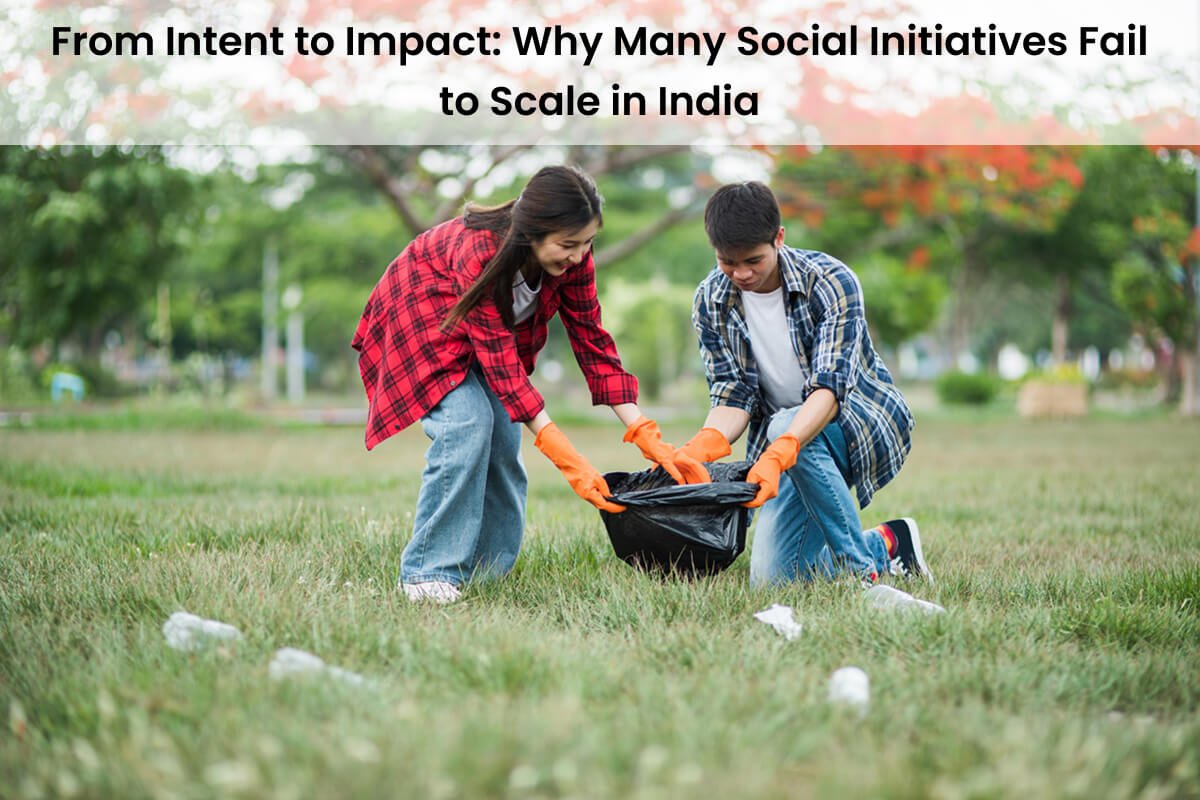
The Gap Between Intent and Impact in Social Initiatives
Many well-meaning social initiatives fail to achieve their full potential because good intentions alone are not enough. Challenges such as misaligned arrangement, lacking local intuitiveness, and inefficient killing frequently prevent money from translating into significant change on the ground. Closing this breach requires deliberate preparation, society engagement, and strong listening to guarantee that support actually reaches those it aims to benefit
What “Scaling Impact” Really Means in India
Scaling impact goes further growing the height of a program—it involves extending reach, insight, sustainability, and addition simultaneously. In India, persuasive climbing resources serving more societies across various geographies, expanding the quality of mediations, guaranteeing enduring benefits, and including marginalized or hard-to-reach communities. True scale constructs lasting change that is to say two together extensive and equitable
Why Many Social Initiatives Start Strong
Social actions frequently start with strength, dream, and a forceful sense of purpose. Early momentum is compelled by determinants that found quick friction and perceptibility. Key reasons contain founder passion and importance, that encourage commitment and breakneck operation; ship-friendly capital, admitting experimentation accompanying creative resolutions; and high early perceptibility, that engages attention from backers, wives, and the society, further accelerating beginning progress.
Structural Challenges That Limit Scale
Despite strong starts, many social initiatives struggle to grow beyond pilot stages due to systemic and structural barriers. These challenges make it difficult to replicate early successes at larger scales.
Common barriers include fragmented ecosystems, where lack of coordination between stakeholders limits efficiency; weak local infrastructure, constraining delivery and impact; and talent and leadership gaps, which reduce organizational capacity to manage growth, partnerships, and complex programs effectively.
Funding Constraints Beyond the Pilot Stage
Many social initiatives experience a surge of support during their early phase, but sustaining funding beyond the pilot stage can be challenging. Initial enthusiasm often wanes as projects move from experimentation to long-term execution.
Factors contributing to this include short-term grants that prioritize early results over sustained impact, preference for innovation over execution, which favors new ideas rather than scaling proven models, and limited risk appetite, where funders hesitate to commit to long-term investments in initiatives perceived as uncertain or resource-intensive.
Operational & Capacity Gaps at the Grassroots Level
Even with adequate funding, grassroots organizations often face execution challenges that limit their ability to scale effectively. These gaps can affect program quality, consistency, and sustainability.
Common operational barriers include limited management capacity, making it difficult to handle growing programs; high dependence on individuals, where key staff are critical to day-to-day operations; and burnout and attrition, which threaten continuity and institutional knowledge, weakening the organization’s ability to deliver impact consistently.
Measurement Problems: When Impact Isn’t Clearly Defined
Even well-intentioned social initiatives can struggle to grow when impact metrics are unclear or poorly defined. Without measurable goals, it becomes difficult to demonstrate results, attract sustained funding, or refine programs for better outcomes.
Unclear or inconsistent measurement stalls scale because stakeholders cannot confidently assess effectiveness, track progress over time, or make evidence-based decisions. Establishing concrete, context-appropriate indicators is essential for translating early success into larger, sustainable impact.
Policy, Compliance & Regulatory Barriers
Navigating India’s policy, compliance, and regulatory landscape can be a significant hurdle for social initiatives, especially when attempting to scale. Varying requirements across regions and sectors increase complexity and risk.
The compliance burden—including registration, reporting, and legal obligations—can consume time and resources, diverting attention from program delivery. Regional variation in regulations further complicates scaling, requiring organizations to adapt to different rules and standards in each operational area. Addressing these barriers is crucial for sustainable, replicable social impact.
Urban Bias vs Rural Reality
Many social initiatives are designed with assumptions based on urban contexts, yet the majority of India’s underserved populations live in rural areas. This mismatch between program design and ground realities can limit effectiveness, as interventions may not address the specific needs, cultural practices, or logistical challenges faced by rural communities. Bridging this gap requires context-sensitive planning and solutions tailored to local conditions.
Lack of Collaboration Across Stakeholders
Scaling social impact often falters due to insufficient coordination among key actors. Fragmented efforts can lead to duplication, inefficiency, and missed opportunities for synergy.
Common challenges include NGOs working in silos, limiting knowledge sharing and coordination; limited corporate–grassroots alignment, where funding priorities and local needs are not synchronized; and weak government integration, which reduces access to policy support, infrastructure, and long-term sustainability. Strengthening collaboration is essential for maximizing reach and impact.
Why Replication Doesn’t Always Work
Scaling a social initiative is not simply a matter of copying a successful pilot to a new location. Context sensitivity is critical—factors such as culture, community dynamics, local infrastructure, and governance can vary widely, affecting program outcomes. Without adapting interventions to these realities, replication may fail to achieve the intended impact, even if the original model was successful.
Role of Technology in Scaling (and Its Limits)
Technology can be a powerful enabler for scaling social impact, providing tools for communication, data management, monitoring, and coordination. It helps streamline processes, track progress, and connect stakeholders across geographies.
However, technology has limits: it cannot replace local knowledge, trust, and human relationships essential for program adoption and effectiveness. Over-reliance on digital solutions may also exclude communities with limited connectivity or digital literacy. Successful scaling requires combining technology with contextual understanding and hands-on engagement.
What Successful Scaling Looks Like in India
In India, successful scaling of social initiatives requires more than replicating a pilot—it demands thoughtful design, flexibility, and sustainable support. Scalable initiatives share several defining characteristics.
They exhibit local adaptability, tailoring interventions to community needs, culture, and infrastructure. They rely on long-term funding, ensuring continuity beyond initial pilots. And they build strong partnerships with corporates, NGOs, and government bodies, leveraging complementary strengths to expand reach and deepen impact while maintaining quality and relevance.
How Ecosystem Support Can Enable Scale
Scaling impact is rarely achieved in isolation. A supportive ecosystem can provide the structures, guidance, and resources necessary for initiatives to grow effectively.
Intermediaries and platforms facilitate coordination, compliance, and capacity building, helping grassroots organizations meet corporate and policy requirements. Policy support creates an enabling environment through clear regulations, incentives, and streamlined approvals. Together, these elements reduce barriers, enhance efficiency, and increase the likelihood that successful interventions can reach more communities sustainably.
FAQs on Scaling Social Impact in India
Scaling social impact in India comes with unique challenges, from structural barriers to funding limitations. The answers below address common questions about why scaling succeeds—or fails.
Q1. Why do most social initiatives fail to scale in India?
Challenges include fragmented ecosystems, weak local infrastructure, governance gaps, and misalignment with local contexts, which prevent pilots from being replicated effectively.
Q2. Is funding the biggest challenge to scaling impact?
While funding is important, operational capacity, leadership, local adaptability, and strategic partnerships are equally critical for sustained scale.
Q3. Can grassroots initiatives scale nationally?
Yes, but successful scaling requires contextual adaptation, strong partnerships, technology support, and long-term funding to maintain quality and relevance across regions.
Q4. What role do corporates play in scaling social impact?
Corporates provide resources, expertise, and strategic support. They can enable scale through funding, capacity building, and facilitating partnerships while aligning initiatives with their CSR or ESG goals.
Q5. How can impact be scaled without losing quality?
By combining standardization of core processes with local adaptation, robust monitoring and evaluation, strong governance, and ecosystem support, initiatives can maintain effectiveness while expanding reach.
Key Takeaways
Scaling social impact is a complex process that requires more than good intentions. Success depends on strategy, partnerships, and adaptability.
- Intent alone is not enough to scale impact; careful planning and execution are essential.
- Structural and funding challenges limit growth, making support mechanisms crucial.
- Collaboration and ecosystem support are critical for overcoming barriers and leveraging resources.
- Sustainable scale requires patience and adaptability, balancing replication with local relevance for lasting impact.
Bring Employee Giving to Life in Your Organization
Employee giving programs are more than a way to contribute—they are a powerful tool to build culture, foster engagement, and strengthen team cohesion within organizations. When employees participate in giving initiatives, it creates a shared sense of purpose and connection to meaningful social causes.
SocialForAction makes it easy to implement structured, manageable employee giving programs, providing transparent tracking, reporting, and simple processes that encourage participation and accountability.HR and CSR leaders looking to design impactful employee engagement programs can explore tailored solutions and get started at: https://www.socialforaction.com/corporate





Post a Comment