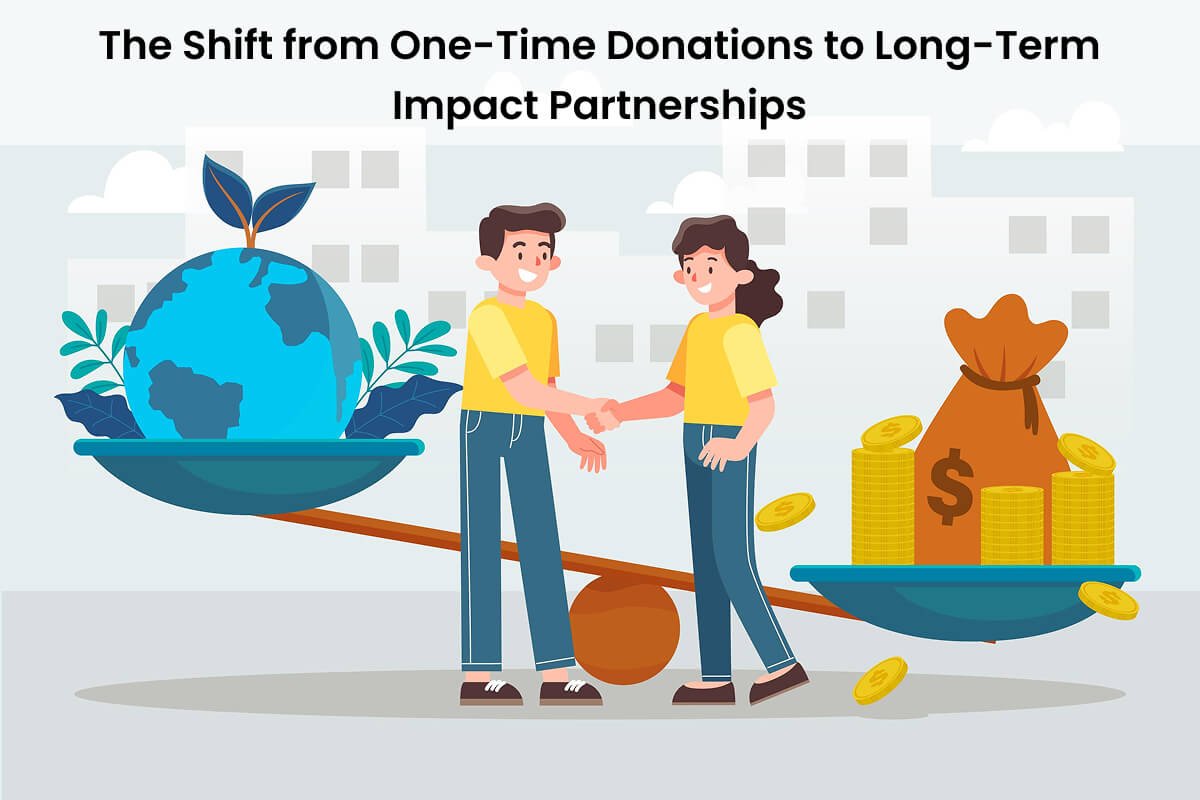
Why One-Time Donations Are No Longer Enough
For many age, lenient giving was buxom about the plan that a single offering keep create a significant difference. While hospitality still matters intensely, the type of today’s social challenges has exchanged.
Most public issues—whether had connection with education, well-being, want, surroundings, or inequality—are systemic and unending. They are formed by tactics, infrastructure break, enlightening determinants, and intergenerational eras that cannot be resolved through short bursts of capital. One-time gifts frequently help address immediate needs, but they exceptionally conceive the security required for enduring change. Without maintained support, programs struggle to plan before, retain skillful stick, measure impact, or acclimate plans over time. As a result, progress can stay or reverse formerly the primary funding is drained.
What Are Long-Term Impact Partnerships?
As the restraints of temporary giving enhance more apparent, a various model has gained significance: enduring impact participations.
These alliances are built on maintained date alternatively isolated undertakings. Instead of putting only on inputs—such as in what way or manner much money is donated—they stress effects, knowledge, and shared aims. Donors and institutions agree over time, joining money, knowledge, and beliefs. This approach allows actions to develop, put oneself in the place of another real-experience challenges, and measure progress more intentionally. Long-term impact alliances recognize that significant change is a process, not a project, what thickness and collaboration are owned by obtaining it.
How Donor Expectations Have Changed
Alongside this shift in capital models, backer expectations have still progressed.
Today’s contributors increasingly inquire responsibility and transparence. They want to accept by means of what money are used, what effects are being attained, and by what method happiness is defined and calculated. Visibility into progress—both booms and setbacks—has enhance more important than refined tales unique. Donors are also more concerned in being participants alternatively passive subscribers, charming accompanying causes in habits that align accompanying their principles and complete vision.
This change indicates a fuller drive toward impact-driven bestowing, place trust is erected through data, talk, and manifested results. As beliefs continue to rise, institutions that supply instructions clearness, education, and sustained impact are better located to build unending friendships with their advocates.
Limitations of One-Time Donation Models
One-time donations are often driven by urgency—responding to a crisis, a compelling story, or a moment of heightened awareness. While these contributions can be meaningful, they also come with structural limitations.
The impact of one-time donations is often short-lived. Funds may cover immediate needs such as supplies, emergency support, or temporary services, but once the money is spent, the problem frequently re-emerges. Without continued investment, programs struggle to maintain momentum or scale what works.
There is also a lack of follow-through inherent in single-instance giving. Donors may never see what happens after the initial contribution, and organizations may lack the resources to report outcomes or sustain engagement. This disconnect limits trust and reduces opportunities for collaboration.
One-time funding rarely supports capacity building. Critical needs—such as staff development, systems improvement, infrastructure, and long-term planning—are often overlooked in favor of visible, short-term outputs. Without strengthening internal capacity, organizations remain reactive rather than resilient.
Finally, minimal learning or improvement occurs when funding ends quickly. Social change requires experimentation, evaluation, and adaptation. Short-term models leave little room to assess what worked, what didn’t, and how approaches could evolve for greater impact.
Why Sustainability Matters in Social Impact
Sustainability is what transforms short-term relief into long-term change.
Short-term relief addresses immediate symptoms—food insecurity today, shelter tonight, emergency aid this month. These responses are necessary, especially in crisis situations. However, without sustained effort, they do not alter the underlying conditions that cause the problem to persist.
Long-term change focuses on building systems, skills, and structures that continue to function after initial funding ends. This might include strengthening local leadership, improving education pathways, supporting economic opportunities, or investing in preventative solutions. Sustainable impact allows communities and organizations to adapt, grow, and maintain progress over time.
In social impact work, sustainability ensures that efforts are not repeatedly starting from zero. It creates continuity, accountability, and resilience—making it possible for meaningful change to last beyond a single donation or funding cycle.
Benefits of Long-Term Partnerships for NGOs
For non-profit organizations and social enterprises, long-term partnerships provide more than financial support—they offer stability and the ability to operate with intention rather than urgency.
Predictable funding allows NGOs to plan beyond short project cycles. Instead of constantly fundraising to keep programs running, organizations can focus on delivering impact, retaining skilled staff, and improving service quality. This financial stability reduces burnout and operational uncertainty, enabling teams to work more effectively.
Stronger planning and execution naturally follow sustained support. With longer time horizons, NGOs can set realistic goals, refine strategies, and respond thoughtfully to challenges rather than reacting to funding gaps. Programs can be piloted, evaluated, and scaled with confidence.
Long-term partnerships also support capacity building and organizational growth. Investments in systems, leadership development, data collection, and infrastructure strengthen the organization as a whole. This internal resilience ensures that impact is not dependent on a single project or individual, but embedded within the organization’s structure and culture.
Benefits of Long-Term Partnerships for Corporates
For corporate partners, long-term social impact relationships create value that goes well beyond one-off contributions or short-term campaigns.
Sustained partnerships enable deeper, more meaningful impact stories. Instead of reporting isolated activities, companies can demonstrate progress over time—showing how their involvement contributed to measurable change. These narratives are more authentic, credible, and aligned with purpose-driven branding.
Long-term engagement also improves CSR and ESG reporting. Ongoing partnerships provide consistent data, clearer outcomes, and stronger alignment with environmental, social, and governance goals. This makes it easier to track progress, meet reporting standards, and communicate impact to stakeholders.
Additionally, long-term partnerships create richer employee engagement opportunities. Employees can participate through volunteering, skill-sharing, mentoring, or site visits, fostering a stronger connection to the company’s social mission. This engagement builds pride, retention, and a shared sense of purpose within the organization, turning social impact into a collective effort rather than a corporate obligation.
Trust, Transparency & Shared Accountability
Effective partnerships are built on more than contracts or funding agreements—they are built on trust. And trust does not form instantly; it develops through consistent interaction, openness, and shared experience over time.
In long-term partnerships, trust grows as both sides demonstrate reliability and integrity. NGOs build trust by being transparent about challenges as well as successes, sharing honest progress updates rather than only positive highlights. Corporates build trust by maintaining commitments, respecting on-the-ground realities, and avoiding short-term shifts in priorities that disrupt programs. Over time, this mutual transparency creates shared accountability, where responsibility for outcomes is collectively owned rather than placed on one side. This environment encourages learning, adaptation, and stronger results because partners feel safe to communicate openly and make improvements together.
Impact Measurement Over Time
Measuring social impact meaningfully requires patience and perspective. One-time assessments or short-term metrics often capture activity, but not change.
Longitudinal data—information collected consistently over extended periods—reveals patterns, trends, and true outcomes. It shows whether interventions are leading to sustained improvements or temporary gains. For example, educational enrollment numbers may look promising in the short term, but long-term data can reveal retention rates, skill development, or life outcomes that better reflect real impact.
Impact measurement over time also allows organizations to learn and adapt. It highlights what is working, what needs adjustment, and where resources are most effective. Rather than relying on isolated snapshots, long-term measurement supports evidence-based decision-making and ensures that social impact efforts remain relevant, accountable, and genuinely transformative.
Role of Collaboration & Co-Creation
Long-term partnerships thrive when they move beyond transactional support and embrace collaboration and co-creation. This shift recognizes that no single organization has all the answers to complex social challenges.
Through joint planning, partners align on shared goals, roles, and success metrics from the outset. Corporates bring strategic thinking, resources, and networks, while NGOs contribute contextual knowledge, community trust, and implementation expertise. Adaptive execution allows plans to evolve based on real-world learning rather than rigid assumptions. As conditions change on the ground, partners can adjust strategies together, improving effectiveness without losing alignment. Co-creation fosters ownership, innovation, and mutual respect—turning partnerships into dynamic problem-solving relationships rather than fixed funding arrangements.
Challenges in Building Long-Term Partnerships
While long-term partnerships offer significant benefits, they also come with challenges that must be acknowledged and managed thoughtfully.
Misaligned expectations can create friction if goals, timelines, or definitions of success are not clearly established. Corporates may seek quick, visible outcomes, while NGOs operate within longer change cycles. Open dialogue and clear agreements are essential to bridge these differences.
Reporting fatigue is another common challenge. Frequent or overly complex reporting requirements can strain NGO capacity and divert resources away from program delivery. Streamlining reporting processes and focusing on meaningful metrics helps maintain balance between accountability and operational efficiency.
Changing leadership or shifting priorities—on either side—can also disrupt partnerships. New decision-makers may bring different visions or commitments. Strong documentation, institutional memory, and shared values help partnerships remain resilient during transitions, ensuring continuity even as individuals or strategies evolve.
What Makes a Partnership Successful
Successful long-term partnerships do not happen by chance; they are intentionally designed and carefully nurtured over time. Beyond funding, they rely on shared understanding and strong working relationships.
Clear goals and roles provide a solid foundation. When both partners are aligned on what they are trying to achieve and who is responsible for what, collaboration becomes more efficient and trust is strengthened. Clarity reduces misunderstandings and helps teams stay focused on outcomes rather than processes.
Regular communication is equally critical. Ongoing dialogue creates space to share progress, address challenges early, and adjust plans as needed. Consistent check-ins—formal or informal—keep expectations aligned and reinforce commitment on both sides.
Mutual respect and flexibility allow partnerships to adapt and grow. Respecting each other’s expertise, constraints, and perspectives fosters a healthy dynamic. Flexibility acknowledges that social impact work is complex and that approaches may need to evolve. Together, these elements create partnerships that are resilient, responsive, and effective.
Real-World Outcomes of Long-Term Engagement
Long-term engagement produces outcomes that short-term initiatives rarely achieve. When partners commit to working together over time, impact deepens and extends beyond individual projects.
One key outcome is scale. Successful programs can be expanded thoughtfully, reaching more communities or addressing additional needs without compromising quality. Long-term support enables organizations to refine models and replicate what works.
Resilience is another critical outcome. Sustained partnerships help organizations withstand funding fluctuations, external shocks, or operational challenges. With stable support and shared problem-solving, NGOs are better equipped to adapt and continue delivering impact.
Most importantly, long-term engagement leads to sustained change. Rather than temporary improvements, communities experience lasting benefits—stronger systems, improved capabilities, and ongoing progress. These outcomes reflect the true value of partnership: change that endures well beyond individual funding cycles.
FAQs on Impact Partnerships
As organizations and donors increasingly look for meaningful ways to create lasting change, several questions often arise about how long-term partnerships truly work and what makes them successful.
Q1. Why are long-term partnerships more effective than donations?
Long-term partnerships address the root causes of social issues rather than just their symptoms. While one-time donations can provide short-term relief, sustained partnerships allow programs to mature, measure results, and adapt for better outcomes. They also build trust and institutional knowledge, making interventions more efficient and impactful over time.
Q2. Do long-term partnerships reduce flexibility for donors?
Not necessarily. In fact, they can increase meaningful flexibility. While donors commit for longer periods, they also gain a closer understanding of real-world challenges and progress. This transparency allows for adaptive funding—redirecting resources as needs evolve. Long-term engagement creates space for co-creation, ensuring donor priorities are aligned with measurable community outcomes rather than rigid commitments.
Q3. How long should an impact partnership last?
The ideal duration varies depending on the complexity of the issue and the goals of both parties. Many partnerships span three to five years, giving enough time to implement, evaluate, and refine programs. However, some collaborations extend a decade or more when systemic transformation is the goal. What matters most is consistency—staying engaged long enough for change to take root and prove sustainable.
Q4. Can small NGOs enter long-term partnerships?
Absolutely. In fact, small and mid-sized NGOs often thrive in such partnerships because they bring agility, deep community insight, and trusted local relationships. Long-term support allows them to strengthen internal systems, scale successful models, and professionalize reporting and evaluation processes. For corporates, partnering with smaller organizations can deliver high-impact results through targeted, context-specific initiatives.
Q5. How is impact measured over long-term collaborations?
Impact in long-term partnerships is measured through both quantitative and qualitative data collected over time. Rather than one-off reports, longitudinal tracking shows how interventions influence lives, systems, and communities in lasting ways. This might include improvements in education retention, health outcomes, livelihoods, or environmental sustainability. Continuous measurement enables both partners to refine strategies, celebrate milestones, and maintain accountability for shared goals.
Key Takeaways
As giving evolves from generosity to strategy, long-term partnerships are becoming the cornerstone of sustainable impact.
One-time donations create short-term relief, but they rarely produce lasting change. Long-term partnerships, by contrast, enable organizations and donors to build trust, plan strategically, and sustain measurable progress. Trust and transparency are not add-ons—they are the foundation that keeps partnerships authentic and accountable. Collaboration ensures that solutions are not imposed but co-created, leading to deeper and scalable outcomes.
When impact is nurtured over time rather than purchased in moments, both communities and partners grow stronger together.
Celebrate Corporate Milestones with Impactful Charity Events
Corporate milestones—like Annual Day, Founder’s Day, Giving Month, or Giving Tuesday—are perfect opportunities to celebrate success by giving back. These occasions can become powerful platforms for reinforcing a company’s values while creating tangible social impact.
SocialForAction helps corporates transform such celebrations into meaningful charity-driven experiences. From designing cause-aligned campaigns to partnering with trusted NGOs, the platform ensures that every milestone contributes to long-term community benefit. Whether it’s sponsoring a livelihood initiative, supporting education, or driving environmental projects, SocialForAction helps organizations turn goodwill into measurable change.Make your next corporate celebration more meaningful. Explore partnership possibilities at socialforaction.com/corporate.




Post a Comment