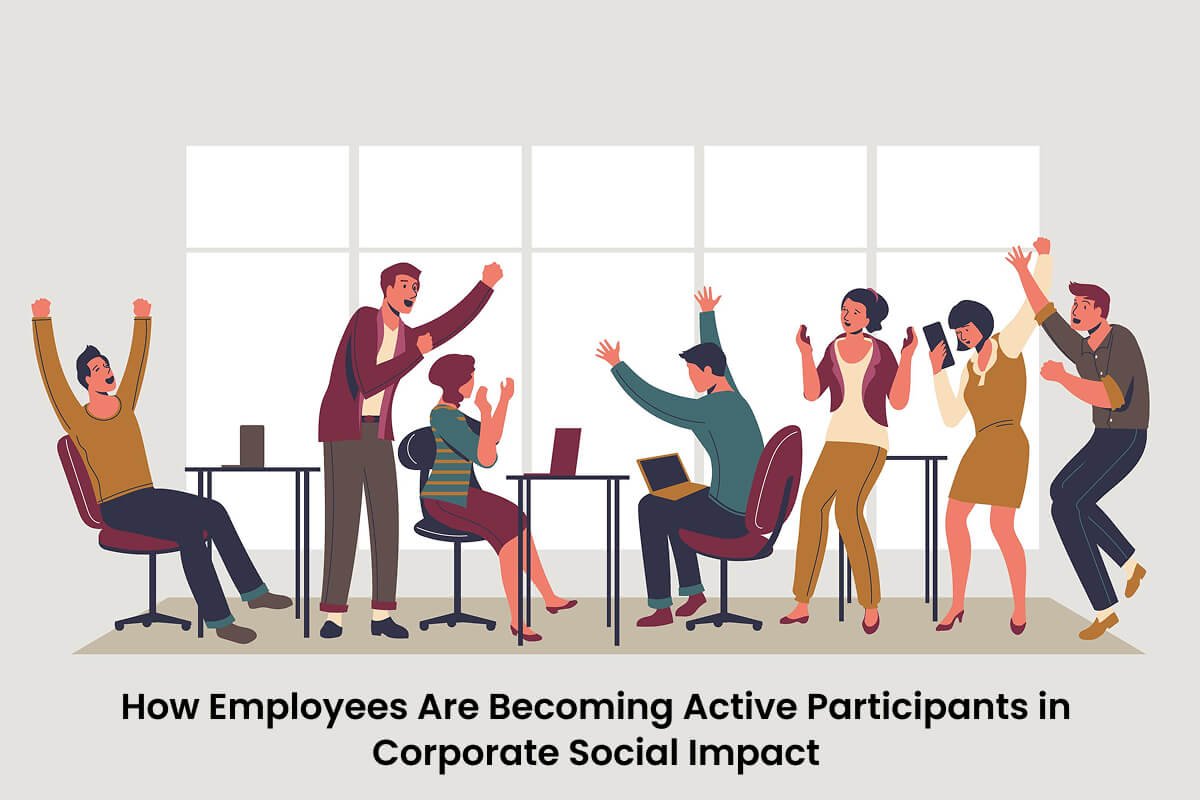
The Evolution of Corporate Social Impact
Before allied public responsibility (CSR) enhanced a office meeting space imperative, it was frequently medicated as a peripheral activity—something give up responsibility center trade strategy. Today, that psychology has fluctuated dramatically as arrangements acknowledge that their public impact is inseparable from complete worth creation.
Corporate public impact has sustained a significant revolution over ancient times few decades. What earlier amounted to lenient gestures or reputational safeguards has progressed into a strategic, principles-compelled approach entrenched within by what method parties operate and evolve.
Traditionally, CSR attracted on philanthropy: making gifts to charities, promoting occurrences, or funding society projects. While friendly, these efforts were frequently variable and episodic, accompanying restricted links to a company’s mission, laborers, or ordinary operations. Impact was calculated in currency likely rather than consequences obtained.
As stakeholder beliefs grew—compelled by employees, users, financiers, and regulators—associations began to reconsider this approach. CSR extended beyond literature cheques to discussing systemic issues to a degree referring to practices or policies that do not negatively affect the environment sustainability, friendly equity, moral supply chains, and society resilience. Businesses begun joining their friendly initiatives accompanying their gist competencies, leveraging what they do best to found significant, scalable change.
Today, allied public impact is more about long-term participations, determinable outcomes, and joint advantage. Organizations be necessary not just to contribute possessions, but to play an alive role in answering social challenges, demonstrating responsibility and genuineness on the way to destination.
Before this deeper engagement accepted hold, many parties relied heavily on fiscal offerings as their primary wealth of “restore.” That model, still, has proven lacking in a globe that demands more transparency, partnership, and honest-planet impact.
From Cheque-Writing to Active Participation
The shift from passive capital to alive participation marks individual of ultimate important changes in new CSR. Companies are not any more content to support causes from the sidelines; alternatively, they are stepping into societies as associates and change agents.
Active partnership way laborers volunteering their occasion and abilities, leaders loaning knowledge to nonprofit allies, and institutions co-devising solutions accompanying the societies they serve. Rather than plainly capital a program, companies grant permission help design it, implement it, and steadily advance it based on certain response and outcomes.
This experiential connection transfers benefits on multiple levels. Communities attain not only to source of subsistence, but also to professional abilities, change, and long-term obligation. Employees knowledge better purpose and engagement, encouraging sophistication and retention. For trades, alive participation deepens believeableness, builds trust, and guarantees friendly initiatives are carefully joined with administrative principles and skills.
Ultimately, moving further check for paying money-writing indicates a fuller understanding of responsibility. It recognizes that tenable friendly impact requires occasion, work, and genuine partnership—not just capital. As CSR resumes to mature, ultimate effective institutions will be those not quite show up, meddle, and provide more than services to the causes they champion.
Why Employees Want to Engage in Social Impact
Work has become more than a means of earning a living. For many employees, it is a platform for expressing values, contributing to society, and being part of something larger than individual performance metrics.
Employee interest in social impact is no longer a “nice to have” feature of the workplace—it is a core expectation. People want their work to matter, not just to their employer, but to the world beyond it.
One of the strongest drivers behind this engagement is the desire for purpose at work. Employees increasingly seek roles that offer meaning and a sense of contribution, especially in an era where work occupies such a significant portion of life. Social impact initiatives allow individuals to see tangible outcomes from their efforts, reinforcing that their time and skills are being used for more than commercial success.
Alignment with personal values is another powerful motivator. Employees want to work for organizations that reflect what they believe in, whether that’s environmental stewardship, social justice, education, or community wellbeing. When a company’s CSR initiatives resonate with individual values, employees feel a stronger emotional connection to their employer, leading to greater loyalty and engagement.
Finally, social impact provides an opportunity to create real-world change. Unlike abstract corporate goals, community projects, volunteering, and advocacy efforts produce visible results. Employees can see the difference they are making—supporting vulnerable communities, protecting ecosystems, or driving awareness around critical issues—which reinforces both personal fulfillment and collective pride.
As these motivations have grown stronger, they have begun to reshape how organizations think about their people and their responsibilities.
Changing Expectations of the Modern Workforce
The modern workforce, particularly younger generations, has fundamentally altered the expectations placed on employers. Purpose, ethics, and social contribution now sit alongside salary and career progression as key decision-making factors.
Younger and purpose-driven employees are especially influential in this shift. Having grown up in a world marked by climate change, social inequality, and global uncertainty, they expect organizations to take an active stance on societal issues. This has pushed companies to design CSR programs that are more authentic, inclusive, and participatory rather than top-down or symbolic.
These employees also expect transparency and measurable impact. They want to understand where resources are going, how success is defined, and whether initiatives are making a genuine difference. As a result, CSR strategies are increasingly co-created with employees, incorporating their feedback, skills, and passions into program design.
In response, organizations are moving away from one-size-fits-all approaches and toward flexible, employee-centric models of social impact—models that reflect the evolving values of the workforce itself.
With expectations rising, companies must also consider the practical ways employees can get involved.
Ways Employees Participate in Social Impact Today
Employee participation in social impact now takes many forms, offering multiple entry points for involvement regardless of role, location, or availability. This flexibility ensures that engagement feels accessible and meaningful rather than forced or performative.
Volunteering programs remain one of the most visible avenues for participation. These may include skills-based volunteering, team service days, or ongoing partnerships with community organizations. By contributing time and expertise, employees move beyond awareness into direct action, often building deeper connections with both colleagues and communities.
Fundraising and payroll giving provide another powerful mechanism for engagement. Employees can support causes they care about through matched donations, workplace campaigns, or regular contributions integrated into payroll. These programs enable collective impact while empowering individuals to choose where their support goes.
Awareness and advocacy initiatives also play a critical role. Employees may participate by sharing information, supporting campaigns, or acting as ambassadors for social and environmental causes. In an increasingly connected world, advocacy amplifies impact, extending the reach of corporate social initiatives far beyond the workplace.
Together, these participation models reflect a broader truth: when employees are given meaningful ways to engage, social impact becomes a shared endeavor—one that strengthens communities, culture, and purpose all at once.
Employee Volunteering Beyond One-Day Events
As employee engagement in social impact deepens, organizations are rethinking how volunteering is designed and delivered. One-off activities, while valuable, are increasingly being complemented by models that prioritize continuity and long-term outcomes.
Employee Volunteering Beyond One-Day Events
Traditional volunteering days have long served as an entry point into community engagement, but their limitations are becoming more apparent. To create lasting value, many organizations are shifting toward sustained and recurring volunteering models.
These approaches involve ongoing commitments, such as monthly volunteering sessions, long-term partnerships with specific nonprofits, or project-based engagement over several weeks or months. By returning to the same communities and causes, employees develop a deeper understanding of the challenges involved and can contribute more effectively over time.
Sustained volunteering also allows organizations to measure impact more meaningfully. Rather than isolated moments of support, recurring involvement builds trust, continuity, and capacity within partner organizations. For employees, this model fosters stronger relationships, skill development, and a sense of accountability—transforming volunteering from a single experience into a shared journey.
As organizations explore more impactful forms of engagement, many are recognizing that time alone is not the only valuable resource employees can offer.
Skill-Based Volunteering & Pro-Bono Support
Skill-based volunteering and pro-bono support represent a powerful evolution in employee-led social impact. Instead of focusing solely on general volunteer tasks, companies are leveraging the professional expertise of their workforce to address complex challenges faced by nonprofits and community organizations.
Professional skills often create higher impact because they address root causes rather than symptoms. For example, technology and digital skills can help nonprofits modernize their systems, improve data security, build websites, or expand digital access for underserved communities. These contributions can dramatically increase efficiency and reach, far beyond what financial donations alone might achieve.
Finance and compliance support is another high-impact area. Employees with expertise in accounting, risk management, or governance can assist nonprofits in strengthening financial controls, improving reporting, or navigating regulatory requirements. This type of support enhances organizational stability and builds long-term resilience.
Strategy and operations guidance further amplifies impact. Professionals skilled in planning, process improvement, and performance measurement can help organizations refine their mission, scale programs, and allocate resources more effectively. By sharing strategic insight, employees enable social organizations to operate with greater clarity and confidence.
Through skill-based volunteering, companies align social impact with their core strengths—creating value that is both meaningful and sustainable.
While structured programs are essential, some of the most innovative social impact efforts begin at the grassroots level.
Employee-Led Social Initiatives
Employee-led social initiatives emerge when individuals or teams identify causes they care deeply about and take ownership of driving change. These grassroots efforts often reflect authentic passion and lived experience, making them especially powerful and credible.
Rather than being centrally mandated, employee-led initiatives empower staff to propose ideas, organize activities, and build momentum around specific social or environmental issues. This could include forming employee resource groups, launching local community projects, or championing awareness campaigns tied to personal interests.
Organizations that support these initiatives—through funding, time allowances, or leadership sponsorship—unlock creativity and ownership across the workforce. Employees feel trusted and valued, while companies benefit from a more diverse and inclusive approach to social impact.
Ultimately, employee-led initiatives reinforce a key principle of modern CSR: the most meaningful impact often comes from listening to employees and enabling them to lead the change they want to see.
Role of Technology in Employee Engagement
As employee participation in social impact grows, technology has become a critical enabler—bridging the gap between intention and action while making engagement easier, more visible, and more measurable.
Digital platforms have transformed how employees discover, participate in, and track social impact initiatives. What was once managed through emails and spreadsheets is now supported by integrated tools that streamline engagement and improve accountability.
Volunteering portals play a central role by serving as a single access point for opportunities. Employees can browse causes, sign up for activities, log hours, and access resources based on their interests and availability. This ease of access lowers barriers to participation and encourages broader involvement across the organization.
Impact dashboards bring transparency and measurement to CSR efforts. These tools aggregate data on volunteer hours, funds raised, skills contributed, and outcomes achieved, allowing both employees and leadership to see progress in real time. Clear visibility into impact reinforces motivation and helps organizations refine their strategies based on evidence rather than assumptions.
Communication tools further strengthen engagement by keeping social impact top of mind. Internal platforms, newsletters, and collaboration tools enable storytelling, recognition, and peer-to-peer encouragement. By sharing successes and lessons learned, organizations create a sense of collective ownership and momentum around their social initiatives.
With the right technology in place, employee engagement becomes not only more efficient, but also more meaningful and scalable.
As participation deepens, the benefits extend well beyond social outcomes—directly influencing organizational performance and reputation.
Benefits of Employee Participation for Corporates
Employee participation in social impact initiatives delivers tangible advantages for organizations, reinforcing the business case for purposeful engagement.
One of the most immediate benefits is higher employee engagement. When employees feel connected to their company’s values and mission, they are more motivated, committed, and satisfied at work. Participation in social initiatives fosters pride and belonging, contributing to improved morale and retention.
A strong employer brand is another key outcome. Organizations that actively involve employees in meaningful social impact are more attractive to prospective talent, particularly purpose-driven candidates. Authentic employee participation strengthens credibility, signaling that CSR is lived internally rather than used solely as an external marketing message.
Employee engagement also leads to better CSR outcomes. When employees are actively involved, initiatives benefit from diverse perspectives, skills, and energy. This shared ownership improves execution, innovation, and long-term sustainability, ensuring social impact efforts deliver real and measurable results.
While corporates gain clear advantages, the positive effects are equally significant for the organizations and communities on the receiving end of this engagement.
Benefits for NGOs & Communities
For NGOs and communities, employee participation offers value that extends far beyond financial contributions. While funding remains important, hands-on involvement brings capabilities, continuity, and collaboration that can be transformative.
Employee volunteers contribute time, expertise, and fresh perspectives, helping organizations strengthen operations, expand reach, and improve effectiveness. Long-term partnerships enable NGOs to plan more confidently, build internal capacity, and focus on mission delivery rather than short-term survival.
Communities also benefit from deeper relationships and sustained support. Instead of one-off interventions, ongoing employee engagement fosters trust, cultural understanding, and solutions that are better aligned with real needs.
Ultimately, when employees actively participate in social impact, NGOs and communities gain partners—not just donors—creating a foundation for lasting, meaningful change.
Challenges in Employee-Led Impact Programs
As employee-led impact programs become more widespread, organizations must also acknowledge the complexities involved in designing initiatives that are both inclusive and effective.
While employee participation adds depth and authenticity to CSR efforts, it also introduces practical challenges that require thoughtful management and structure.
Time constraints are one of the most common barriers. Employees often balance demanding workloads alongside personal commitments, making it difficult to consistently engage in social initiatives. Without flexibility or organizational support, participation risks being limited to a small, already-engaged group.
Alignment with core business objectives can also be challenging. Social initiatives that feel disconnected from a company’s mission or expertise may struggle to gain leadership buy-in or long-term investment. When CSR efforts operate in isolation, they risk being perceived as optional rather than integral to the organization’s purpose.
Measuring contribution presents another ongoing challenge. Employee-led activities are often diverse and qualitative in nature, making it harder to quantify outcomes. Without clear metrics, organizations may struggle to assess effectiveness, demonstrate value, or continuously improve their programs.
Addressing these challenges is essential to unlocking the full potential of employee participation.
How Companies Can Enable Meaningful Participation
To support impactful and sustainable employee engagement, companies must move beyond ad-hoc initiatives and create environments where participation is encouraged, supported, and rewarded.
Clear participation frameworks provide the foundation. By defining available opportunities, time commitments, and impact goals, organizations make it easier for employees to get involved without confusion or uncertainty. Structured frameworks also ensure consistency while still allowing flexibility for individual interests.
Leadership support plays a critical role in legitimizing employee participation. When leaders actively champion social initiatives—through visible involvement, resource allocation, or recognition—it sends a powerful message that impact matters. Leadership endorsement helps embed CSR into organizational culture rather than positioning it as a side activity.
Long-term partnerships with NGOs further strengthen participation. Sustained relationships allow employees to engage more deeply, understand community needs, and contribute to meaningful outcomes over time. For organizations, these partnerships enable better planning, clearer impact measurement, and stronger alignment with social goals.
When companies invest in these enablers, employee participation becomes purposeful, scalable, and enduring.
As interest in employee-led CSR continues to grow, many organizations and individuals share common questions about how and why participation matters.
FAQs on Employee Participation in CSR
Employee participation in CSR is gaining momentum, but understanding its value and practical application helps organizations design more effective programs.
Q1. Why is employee participation important in CSR?
Employee participation brings authenticity, energy, and diverse perspectives to CSR initiatives. It strengthens organizational culture, enhances social impact, and ensures initiatives are grounded in real engagement rather than symbolic actions.
Q2. What is skill-based volunteering?
Skill-based volunteering involves employees using their professional expertise—such as technology, finance, strategy, or operations—to support NGOs and social organizations. This approach creates higher, longer-lasting impact by addressing critical organizational needs.
Q3. How can companies encourage employees to participate?
Companies can encourage participation by offering flexible opportunities, providing clear frameworks, recognizing contributions, and demonstrating leadership support. Making impact visible and accessible also helps drive engagement.
Q4. Do employees really want to engage in social impact?
Yes. Many employees, especially purpose-driven and younger workers, actively seek opportunities to contribute to social and environmental causes through their workplace. Meaningful participation enhances job satisfaction and connection to the organization.
Q5. How is employee impact measured?
Employee impact is measured using a combination of quantitative and qualitative metrics, such as volunteer hours, skills contributed, funds raised, project outcomes, and community feedback. Technology platforms often support tracking and reporting to ensure transparency and continuous improvement.
Key Takeaways
Modern CSR is defined by participation, purpose, and partnership. When employees are empowered to engage, social impact becomes deeper, more authentic, and more sustainable.
Employees are central to modern social impact. Their values, skills, and lived experiences shape initiatives that are relevant and responsive to real-world needs. CSR is no longer something done for communities—it is something built with people.
Active participation creates deeper engagement. When employees move beyond passive involvement to hands-on action, they develop stronger connections to both their organization and the causes they support. This sense of ownership fuels motivation, trust, and long-term commitment.
Skill-based contributions amplify outcomes. By applying professional expertise to social challenges, employees help address root issues and build lasting capacity within NGOs and communities. These contributions often deliver far greater impact than financial support alone.
Companies that enable participation build lasting impact. Through clear frameworks, leadership support, and long-term partnerships, organizations can create ecosystems where social impact thrives—benefiting employees, communities, and the business itself.
With employee participation at the heart of CSR, the need for transparency, trust, and accountability becomes more important than ever.
Choose a CSR Platform Built on Trust, Transparency, and Impact
For companies committed to meaningful and credible social impact, choosing the right CSR platform is critical. SocialForAction stands out as India’s 100% transparent donation platform, designed to ensure that every contribution creates real, measurable change.
SocialForAction enables direct donations to verified causes, eliminating ambiguity around where funds go and how they are used. Each NGO and project on the platform is carefully vetted, giving corporates confidence that their contributions are reaching trusted, impact-driven organizations.
Transparency and accountability are built into the platform’s core. Clear reporting, traceability of donations, and outcome-focused insights help companies meet compliance requirements while building trust with employees, stakeholders, and communities alike.
For decision-makers looking to strengthen employee participation, streamline CSR execution, and deliver credible impact, SocialForAction provides a purpose-built solution.Learn more about how your organization can drive transparent, employee-led CSR at
👉 https://www.socialforaction.com/corporate



Post a Comment