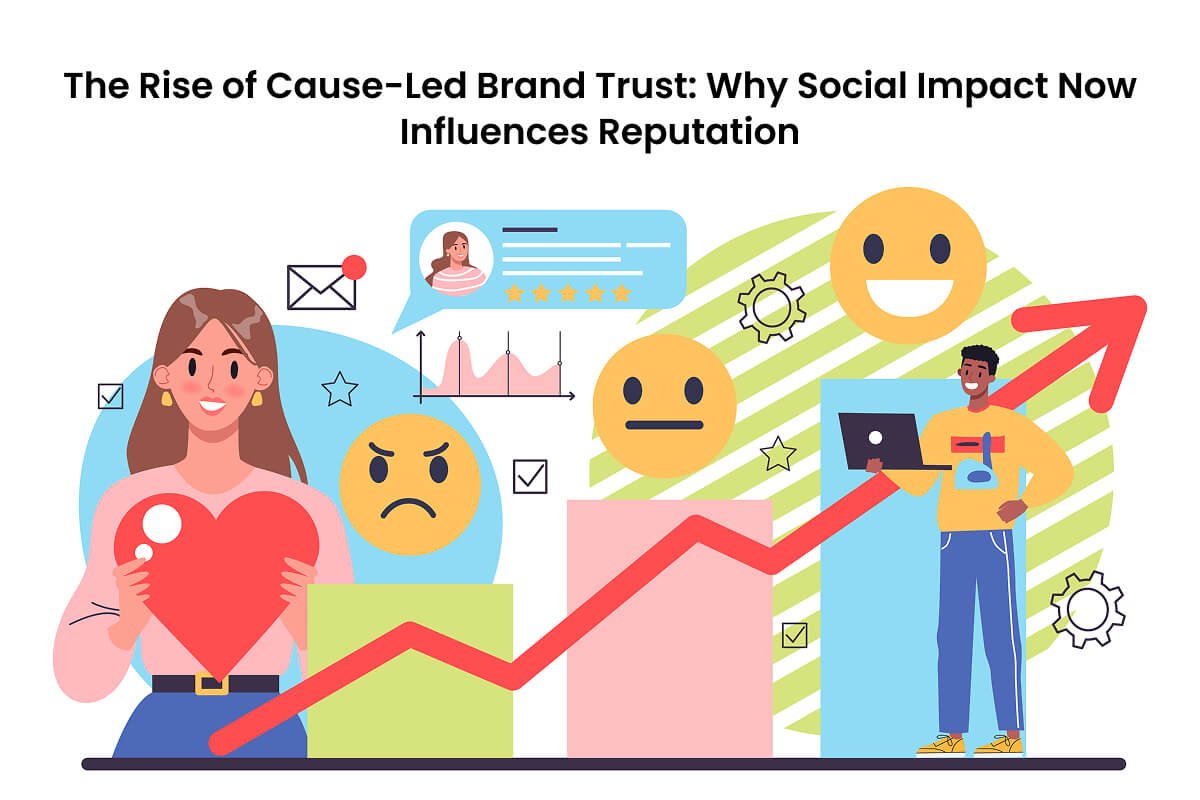
What Is Cause-Led Brand Trust?
In an term place consumers are more cognizant and discriminating than always, trust is not any more built only on which a brand sells, but on which it signifies.
Cause-led brand trust refers to the believeableness a brand earns through compatible, real friendly impact over time—rather than through unique campaigns or shopping-compelled pushs.
Unlike traditional brand-construction exertions that depend made-up story alone, cause-managed trust is implanted lethargy. It is settled when a brand repeatedly manifests obligation to friendly or incidental causes in ways that are joined accompanying allure principles and operations. Consumers acknowledge this regularity and start to associate the brand accompanying integrity, maturity, and unending determined.
Importantly, cause-managed brand trust cannot be manufactured through temporary publicities or individual-off CSR incitement. It grows when impact is entrenched into accountable, alliances, and attitude, proving that a brand’s obligation longers further perceptibility to real-globe effects.
As trust has enhance more approximately tied to believeableness, the institutions of brand trust itself have evolved.
How Brand Trust Has Evolved Over Time
Brand trust has fluctuated significantly from a fruit-main idea to a principles-driven individual. In the past, trust was generally erected on characteristic, reliability, and performance—acted the merchandise work as pledged, and acted the brand deliver regular profit?
While these determinants wait essential, they are no longer enough on their own. Today’s customers judge brands through a more extensive lens that involves morality, transparence, and public responsibility. How a party treats allure staff members, beginnings materials, impacts the atmosphere, and provides to institution immediately influences purchasing resolutions while powerfully as brand features.
This progress indicates a deeper change in services anticipations. Brands are no longer visualized as flat bodies; they are seen as active colleagues in people. As a result, trust is reaped not only by convergence functional needs, but by joining accompanying the principles and concerns that matter to customers in their everyday lives.
These changeful anticipations help justify reason social impact has enhance aforementioned a effective motorist of consumer attitude.
Why Consumers Care About Social Impact Today
Consumers care about social impact today because they are more aware, more empowered, and more values-driven than ever before. Access to information has reshaped how people evaluate the brands they choose to support.
Increased awareness and access to information mean that consumers can easily research company practices, supply chains, and social initiatives. Transparency—whether intentional or forced—has made it difficult for brands to hide behind surface-level claims. As a result, consumers reward those that demonstrate real impact and hold others accountable.
There is also a growing preference for ethical and responsible brands. Many consumers actively seek out companies that prioritize sustainability, fairness, and community wellbeing. Choosing such brands allows individuals to align their purchasing decisions with their personal beliefs, reinforcing a sense of responsibility and agency.
Finally, consumers are motivated by a desire to support meaningful causes. In a world facing complex social and environmental challenges, people want their consumption to contribute to positive change, however small. Brands that enable this—by embedding purpose into their operations—become trusted partners in that journey.
Together, these factors underscore a simple truth: social impact is no longer peripheral to brand trust—it is central to it.
The Link Between Social Impact and Brand Reputation
As purpose becomes a defining factor in how brands are judged, social impact has moved from a peripheral activity to a core driver of reputation and credibility.
Brand reputation today is shaped as much by a company’s impact as by its products or services. Social impact influences how a brand is perceived across key stakeholder groups—customers, investors, and employees—each of whom evaluates credibility through a different lens.
For customers, visible and consistent impact signals integrity. Brands that actively contribute to social or environmental causes are seen as more responsible and trustworthy, particularly when their actions align with their stated values. This perception often translates into stronger loyalty and long-term preference.
Investors increasingly factor social impact into their assessments of risk and sustainability. Companies that demonstrate responsible practices and measurable impact are viewed as better positioned for long-term growth, regulatory resilience, and stakeholder trust. Social impact, in this context, becomes a marker of governance quality and future readiness.
Employees, meanwhile, see social impact as a reflection of organizational culture. A strong commitment to purpose fosters pride, engagement, and retention, while reinforcing the belief that the company is doing more than pursuing profit alone. Together, these perceptions reinforce brand reputation from the inside out.
As reputation becomes more closely tied to values, the gap between genuine purpose and superficial messaging becomes impossible to ignore.
Trust vs Marketing: Why Purpose Can’t Be Faked
In a highly transparent and connected world, purpose-driven branding cannot rely on marketing alone. When actions fail to match messaging, trust erodes quickly and often irreversibly.
Consumers and stakeholders are increasingly adept at identifying inconsistencies. A brand that promotes social responsibility while engaging in unethical practices, neglecting commitments, or delivering minimal impact risks being perceived as inauthentic. This disconnect undermines credibility, regardless of how compelling the campaign narrative may be.
Purpose cannot be switched on for visibility and off for convenience. Trust is built through consistent behavior over time, not through isolated initiatives timed around launches or public scrutiny. When social impact is treated as a branding exercise rather than a responsibility, stakeholders disengage, and reputational damage follows.
This reality underscores the importance of moving beyond messaging toward openness and accountability.
Role of Transparency in Building Cause-Led Trust
Transparency is foundational to building cause-led brand trust. It allows stakeholders to see not just what a brand claims to do, but how it actually delivers on its commitments.
Open reporting of initiatives provides clarity into where resources are allocated and which causes are being supported. By sharing goals, partnerships, and progress, brands demonstrate seriousness and invite stakeholders into their impact journey.
Honest communication of outcomes further strengthens credibility. This includes reporting both successes and limitations, supported by data and real-world insights. Stakeholders are more likely to trust brands that prioritize truth over perfection.
Equally important is a willingness to share challenges. Acknowledging setbacks, learning curves, or areas for improvement signals maturity and authenticity. Rather than weakening trust, this openness reinforces the perception that a brand is committed to continuous improvement.
Together, transparency, honesty, and accountability transform social impact from a claim into a credible source of long-term brand trust.
Employee Advocacy and Internal Alignment
As trust becomes increasingly decentralized, it is shaped not only by what brands say externally, but by how consistently purpose is lived and reflected internally.
Employees play a critical role in reinforcing—or weakening—cause-led brand trust. As the most credible ambassadors of a brand, their experiences and beliefs often carry more weight than formal communications.
When employees genuinely understand and believe in a company’s social impact efforts, they naturally become advocates. Their conversations, actions, and online presence reinforce brand credibility because they reflect lived experience rather than scripted messaging. This internal alignment creates consistency between what a brand promises and what it delivers.
Conversely, misalignment erodes trust. If employees feel disconnected from or skeptical about a company’s stated purpose, that disconnect often surfaces—through disengagement, negative feedback, or contradictory narratives. In such cases, even well-funded CSR efforts can appear performative.
Strong internal alignment ensures that social impact is not confined to reports or campaigns, but embedded in culture. When employees are informed, involved, and empowered, brand trust is strengthened from the inside out.
This internal authenticity is constantly tested in an environment where visibility and accountability are immediate.
Impact of Social Media on Brand Accountability
Social media has fundamentally changed how brands are held accountable for their actions. In a real-time, always-on environment, social impact claims are subject to instant scrutiny and public feedback.
Consumers, employees, and activists can quickly amplify inconsistencies, question motives, or highlight gaps between stated values and actual behavior. This immediacy leaves little room for controlled narratives, forcing brands to operate with greater honesty and responsiveness.
At the same time, social media creates powerful feedback loops. Positive impact stories can gain traction quickly, strengthening trust and credibility when shared authentically. Negative experiences or unmet expectations, however, can spread just as fast, affecting perception across wide audiences.
In this landscape, accountability is no longer optional. Brands that listen, respond transparently, and adapt based on feedback are better positioned to sustain trust over time.
These dynamics have a direct influence on how consumers make purchasing decisions.
How Cause-Led Trust Influences Buying Decisions
Cause-led trust plays an increasingly decisive role in shaping consumer behavior. As values become integral to purchasing choices, trust built through social impact influences not just awareness, but action.
Consumers are showing clear preference shifts toward purpose-driven brands—those that demonstrate responsibility, fairness, and positive contribution. When given a choice, many buyers actively choose brands that align with their values, even if alternatives are similar in quality or function.
There is also a growing willingness to pay for trusted brands. Consumers often perceive socially responsible brands as more credible and dependable, justifying a premium based on trust, ethics, and long-term value rather than price alone.
Perhaps most importantly, cause-led trust fosters long-term loyalty over short-term price considerations. When consumers believe in a brand’s purpose, they are more likely to remain loyal, advocate for the brand, and forgive occasional missteps. This enduring relationship transforms trust into a sustainable competitive advantage.
Risks of Performative or Surface-Level CSR
As expectations around purpose and accountability rise, the margin for error in social impact efforts has narrowed. Brands are increasingly judged not just on intent, but on execution and follow-through.
Performative or surface-level CSR poses significant risks to brand trust, often causing more harm than doing nothing at all. When social impact lacks depth or authenticity, stakeholders quickly recognize the gap between claims and reality.
Greenwashing or impact-washing is one of the most common pitfalls. Brands may highlight environmentally or socially themed messaging without making meaningful operational changes. Once exposed, these practices severely damage credibility and invite public skepticism.
One-off campaigns without follow-through also undermine trust. Short-term initiatives tied to specific dates or marketing cycles may generate visibility, but they fail to demonstrate genuine commitment. Without continuity, stakeholders perceive these efforts as opportunistic rather than purposeful.
A lack of measurable outcomes further weakens credibility. When brands cannot clearly articulate what their initiatives have achieved, impact claims appear vague and unverifiable. Transparency requires not just storytelling, but evidence of progress and learning.
Avoiding these risks requires intentional design and a long-term view of impact.
How Brands Can Build Authentic Cause-Led Trust
Authentic cause-led trust is built through alignment, consistency, and accountability. Brands that approach social impact as a core responsibility—not a communications strategy—are far more likely to earn lasting credibility.
Aligning causes with core business values is the first step. When social initiatives connect naturally to what a company does, how it operates, and the expertise it brings, impact feels credible and integrated rather than forced.
Committing to long-term impact reinforces seriousness of intent. Sustainable change rarely happens quickly, and brands that invest in ongoing partnerships, multi-year goals, and continuous improvement demonstrate that their purpose extends beyond visibility or short-term returns.
Measuring and reporting outcomes completes the trust loop. Clear metrics, regular reporting, and honest reflection allow stakeholders to understand progress, challenges, and results. This openness transforms impact from a claim into a verifiable practice.
Together, these principles create a foundation for trust that withstands scrutiny and evolves over time.
As social impact becomes a strategic priority, brands must also rethink how they evaluate reputation itself.
Measuring Reputation Through Social Impact
Reputation driven by social impact cannot be assessed through brand sentiment alone. While awareness and perception matter, deeper indicators provide a more accurate picture of trust and credibility.
Stakeholder trust is a key measure. This includes confidence among customers, partners, investors, and regulators that a brand acts responsibly and consistently. Trust is reflected in long-term relationships, advocacy, and resilience during periods of challenge.
Employee engagement offers another powerful indicator. High participation in social initiatives, strong alignment with purpose, and positive internal feedback signal that impact is embedded within the organization—not just projected outward.
Community perception completes the picture. Feedback from NGOs, beneficiaries, and local communities reveals whether initiatives are truly addressing needs and creating value. Strong community relationships indicate relevance, respect, and sustainable impact.
By focusing on these indicators, brands can move beyond surface metrics and understand how social impact genuinely shapes reputation and trust.
FAQs on Cause-Led Brand Trust
Understanding cause-led brand trust helps organizations move from intent to meaningful action and long-term value creation.
Q1. What is cause-led brand trust?
Cause-led brand trust is the credibility a brand builds by consistently delivering genuine social or environmental impact over time. It is rooted in action, accountability, and alignment with core values—rather than short-term campaigns or messaging.
Q2. Does social impact really affect brand reputation?
Yes. Social impact significantly shapes how customers, employees, and investors perceive a brand. Consistent, transparent impact strengthens reputation, while superficial or inconsistent efforts can quickly erode trust.
Q3. How can brands avoid performative CSR?
Brands can avoid performative CSR by aligning initiatives with their core business, committing to long-term partnerships, measuring outcomes, and communicating progress honestly—including challenges and learnings.
Q4. Do consumers reward socially responsible brands?
Increasingly, yes. Many consumers actively prefer purpose-driven brands, show greater loyalty toward them, and are often willing to pay a premium when trust and values alignment are present.
Q5. How can brand trust through impact be measured?
Brand trust through impact can be measured through indicators such as stakeholder confidence, employee engagement, community feedback, and the consistency and outcomes of social initiatives—not just brand awareness or sentiment alone.
As these insights show, cause-led trust is no longer optional—it is foundational to how brands are evaluated and remembered.
Key Takeaways
In today’s transparent and values-driven marketplace, brand trust is earned through responsibility, not rhetoric.
Social impact is now a core driver of brand trust. Stakeholders expect brands to contribute meaningfully to society and demonstrate accountability through action.
Authentic action matters more than messaging. Purpose cannot be manufactured through campaigns alone—it must be embedded in behavior, decisions, and long-term commitments.
Transparency and consistency build credibility. Open reporting, honest communication, and sustained engagement reinforce trust and withstand public scrutiny.
Cause-led brands earn long-term reputation and loyalty. When impact is real and values are lived, trust deepens—creating enduring relationships with customers, employees, and communities alike.
For organizations ready to turn purpose into credible, measurable action, the next step matters.
Start Your Corporate Giving Journey with SocialForAction Today
If your organization is serious about building authentic trust through social impact, it starts with choosing the right partner. SocialForAction is India’s 100% transparent corporate giving platform, built to help brands deliver real, accountable impact—not just promises.
Explore verified causes, enable direct donations, ensure full traceability, and strengthen your brand’s credibility through transparent, outcome-driven giving.Take the next step toward meaningful, cause-led impact today.
👉 Visit https://www.socialforaction.com/corporate and start building trust that lasts.



Post a Comment